These 4 culprits are why your home has hot and cold spots, but fortunately, there’s usually an easy fix
Temperature fluctuations will wreak havoc on your home comfort


When it's cold outside, it's all the more important that we stay warm inside. But temperatures like this can highlight hot and cold spots in our homes, leaving the environment anything but comfortable.
Furthermore, if you are going to the effort of keeping your home warm in winter, the last thing you want is a cold spot disrupting your plans. But in order to fix these problems, you need to understand what's causing them.
What are the most common reasons a home might have hot and cold spots?
If you've noticed you have hot and cold spots at home, it's worth doing a bit of investigating as to what is causing the issue so that you know who to call to fix it, or whether it's something you can do yourself.
To help give you a bit of a steer as to what might be causing your issue, these are the most common reasons you'll be finding drastic temperature variations around your home.
1. You've got an issue with your heating system

And obvious reason is that there is an issue with your heating system — so it's worth checking which radiators are getting hot and which aren't, as well as whether they are equally heating at the top and the bottom, as a starting point.
‘The biggest culprits are system-side: radiators that aren’t balanced, trapped air, sludge that throttles flow, and controls that switch the heat off too early,’ explains Nicholas Auckland, Managing Director at Trade Radiators. 'When one or two radiators have very short pipe runs or wide-open lockshields, they hog the flow, so distant rooms never get up to temperature. Cool tops on radiators point to air, while cold patches or a slow warm-up usually suggest sludge, stuck thermostatic radiator valve (TRV) pins, or a pump speed that’s wrong for the circuit.'
It could also be that a thermostat mistake is to blame. ‘A room thermostat sited in a warm hallway, above a radiator, or in direct sun will satisfy the boiler while lived-in rooms stay chilly,’ adds Nicholas.
In terms of solving these issues, some are simple and can be done on a DIY basis, while others will need the help of a professional.
- Radiators cold at the top? You need to bleed your radiators. Just make sure you do it in the correct order
- Radiators cold at the bottom? This is likely caused by a build up of sludge, and the only cure is to flush your radiators
- Some radiators warm and others aren't? You may need to balance your radiators or unstick the pin in a thermostatic radiator valve.
If these steps don't solve the problem, you may need to call in the pros. 'If performance is still patchy, a professional chemical clean or powerflush, new TRVs or a circulation pump, or a controls tidy-up and zoning will usually restore balance,' concludes Nicholas.
2. You've blocked heat emitters with furniture

Be mindful how you place your furniture if you want to maximise the heat you get from your radiators
Even if there is no issue with your heating system or radiators, check whether your furniture could be the culprit of cold spots. If you have blocked radiators with large, bulky furniture, then the heat will struggle to flow from your radiator into the rest of the room.
In small rooms especially, you may not have the luxury of choice when it comes to your furniture layout. Even pulling furniture a few inches away from your radiator can help the warm air to circulate better, warming up the space in no time. It also means your boiler won't have to work quite as hard, so it could reduce your energy usage too.
3. Your insulation is failing

Cold spots may also be a sign that your insulation needs replacing. If it's been installed properly, your insulation should last for decades, so it's worth thinking about the age of your home and whether this could be a reason your home is feeling chilly.
However, there are factors that could cause your insulation to fail much sooner. This could be moisture ingress, pest infestation, compaction or just general disturbance. The last two are particularly common in loft spaces that are used for storage.
'Hot and cold rooms usually trace back to discontinuous loft and roof insulation, blocked ventilation, and moisture in the roof void,' says Alex Morrisey, founder of Best Roofers. 'Thin or patchy insulation over eaves, around downlights and tanks, and at loft edges is common, and storage boards often compress it flat.' All of these contribute to your home feeling cold.
As what insulation is made of can be harmful, more so if there has been a pest infestation, you might want to call on a professional who will be able to determine where and how the insulation needs replacing.
4. You've got draughts that need resolving
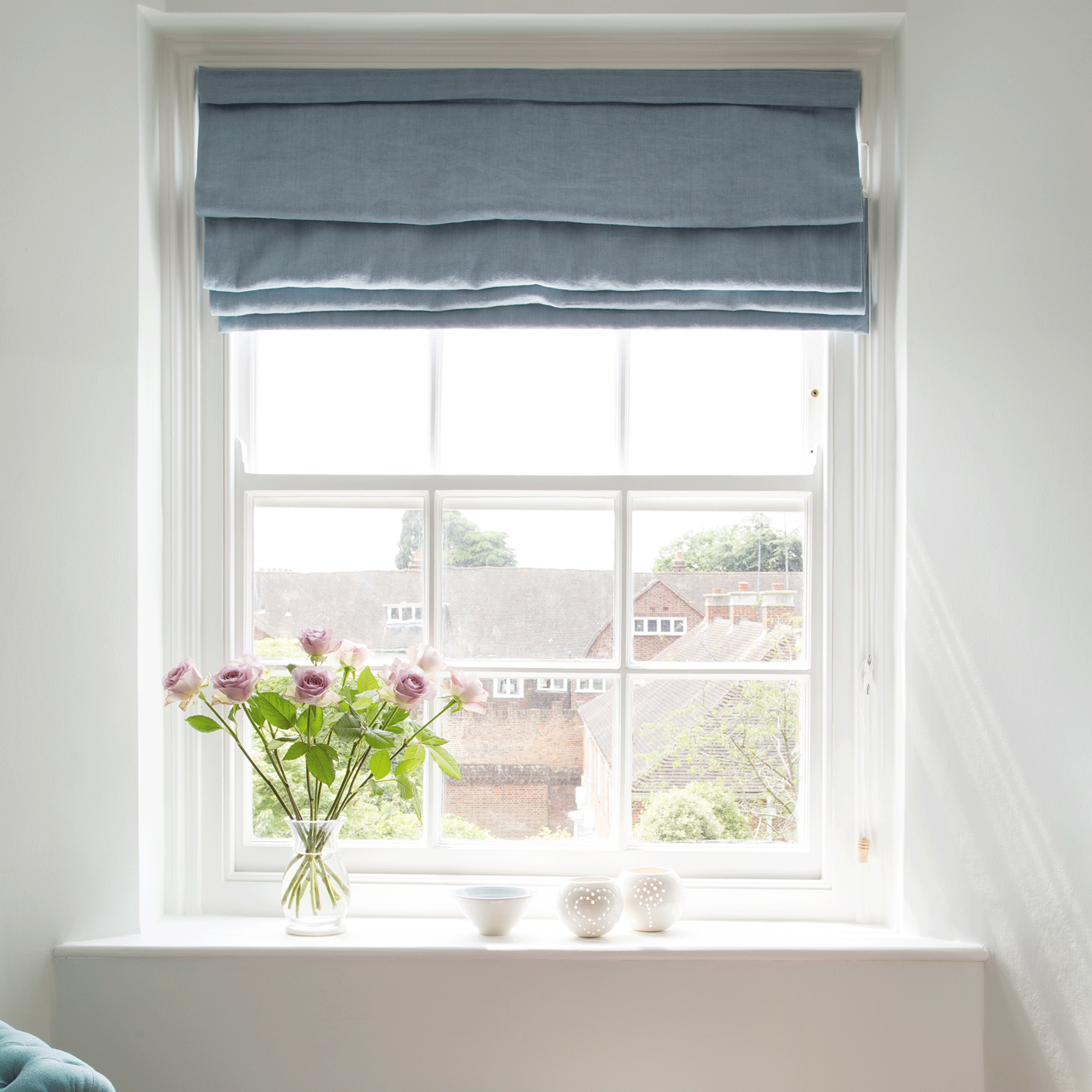
Draughts are one of the worst offenders when it comes to rooms feeling chilly, and the good news is you can usually spot and resolve these (at least temporarily) on a DIY basis.
Older windows and doors, especially if they have single glazing, are a common cause, but you could also be dealing with draughts through floorboards and around skirting boards, loft hatches and your fireplace.
Fortunately, these inexpensive buys can help solve the problem and get your home warm and cosy again.

Really affordable and easy to install, this tape will block draughts around windows and doors in a jiffy.

If you're feeling draughts through floorboards, a quick fix is to invest in a new rug to block them.

Bypass common loft insulation mistakes by making sure your loft hatch is well insulated to keep heat from escaping through the roof.

When your fireplace is not in use, this chimney draught excluder will keep warm air in and cold air out.

Ideal Home contributor Amy installed this secondary glazing film in her home and was impressed with how well it worked.

Letterboxes can also be guilty of making your home colder. Block those draughts with a letterbox draught seal instead.
Another good option is to have some indoor sealant on hand, like this UniBond Fill & Repair Sealant (£15.99 at Amazon). It's ideal for sealing gaps around skirting boards and coving as well as window and door frames.
Mistakes to avoid when resolving hot and cold spots at home
While it's always a good idea to address anything that is making your home too hot or too cold, it's important to avoid mistakes while doing so. Those temperature fluctuations (and their underlying causes) can wreak havoc on your energy bills, causing you to spend more than you need to. If you inadvertently cause another issue, you could find yourself having to rectify another issue that could be costly.
The most common mistakes to dodge are:
- Ignoring the problem. By putting off investigating the cause of hot and cold spots, you not only have to live with uncomfortable temperature swings for longer, but it can also mean you have unnecessarily high bills for longer. In a few cases, delaying could lead to a more serious problem.
- Taking shortcuts. For the most effective results, especially if you are trying to resolve your hot and cold spots on a DIY basis, it's important you do it properly. Getting it wrong could mean you need to spend more by calling on a pro.
- Not calling a pro when you need to. Some tasks should be left to a professional from the get-go, so be realistic about your DIY skillset before you attempt a fix yourself. If it's not in your wheelhouse, save yourself the time and hassle and call someone to do it for you.
Resolving these hot and cold spots will not only make your home more comfortable, but could also help save energy in your home too.
