I’ve tested dozens of fans this summer, and these are the ones that I’d trust to see me through another heatwave when they’re back in stock
As someone who struggles with excessive heat, I'm well placed to put the best fans through their paces in my own home


Due to high demand, several of the fans in this guide are out of stock. We've highlighted where you can find in-stock alternatives.
If this record-breaking summer is anything to go by, having one of the best fans around will be key to carving out a comfortable space as temperatures sky rocket. But with the excessive heat we've experienced this summer, many of the fans on our list are out of stock.
But even if this summer turns out to be an anomaly, it's worth waiting for the models on this list so you can snap them up when they come back into stock. Trust me, as someone who is always a little bit warm between the months of April and October, even when there's not a heatwave, I know how important it is to have the right kit at home to keep you cool. After all, both fans and air circulators are brilliant for moving air around, which can make your home feel fresher and you feel cooler.
To help you make the right choice when stock is replenished, I've tested a range of fans, from pedestal to desk fans and from the likes of Meaco, Duux, Dyson and more in my own home. As well as comparing the fans on looks, ease of use and price point, I've also measured features like wind speed and noise levels to see how they compare and which is best. I've ranked the ones I think are most worth your money below.
If you are after something to actually reduce the temperature in your home, however, then these fans may not cut it, and you'll want to bookmark one of the best portable air conditioners for when they are back in stock instead.
Where to find in-stock fans
Due to unprecedented demand during this summer's heatwaves, our top-rated fans are currently sold out. However, I've highlighted below where I've found some models still in stock.
- Amazon does have some pedestal fans still available, but many do have longer delivery times than normal.
- B&Q has pedestal, tower and handheld fans available for next day delivery.
- Very. There are a few left in stock, including the Shark ChillPill and the Dyson HushJet Mini Cool Fan.
- Dyson has its HP100 purifying fan heater in stock that offers three functions in one appliance. It's handheld offering, the HushJet Mini Cool Fan, is also in stock.
Quick list
Short on time? This quick list is an overview of the very best fans you can buy based on our in-house testing process. You'll find more information on each fan and why our team of expert testers recommend it if you keep scrolling.
If your chosen one is out of stock, bookmark this page so you can refer back when stock is replenished.

Best fan overall
In old English Sefte means quiet, gentle and soft, and Meaco's Sefte 10'' pedestal air circulator definitely lives up to its name. It's also been very thoughtfully designed, from lights and sounds that turn off when it night mode and the variation of oscillation settings to the glow in the dark and magnetic remote control.

Best pedestal fan
There's a lot to love about this effective Pro Breeze fan, but one of my favourite features was the scent pod that means your home smells lovely whenever the fan is on. The base is a little large for it in desktop set-up, but it's ideal in pedestal mode. It's also really easy to control via the unit itself, the remote control or the Pro Breeze App.

Best desktop fan
If you want something to sit on your desk while you're working, or a side table while you sleep, this Morphy Richards fan is a great choice. It's compact enough to sit easily on a table top, effective at getting the air moving in your space, and incredibly intuitive to use via the remote control or panel on the fan base. If you love the look but want something floor standing, it's also available in a pedestal version.

Best tower fan
Shark's bladeless tower fan might have a divisive appearance, but if you and your partner disagree about fan settings, then the customisation possible with the TurboBlade may put the issue to rest for good. Our tester couldn't fault it on performance, despite it not being the quietest fan we've tested.

Best fan for bedrooms
And updated version of the bestselling Whisper fan, Duux's Whisper 3 does not disappoint. You genuinely can't hear that it's on in the lower wind speeds, it oscillates silently and has a minimalist look that will appeal to those who want the fan to fade into the background. If smart control is crucial for you, then check out the Duux Whisper Flex 2, which we have spotted in stock and on sale on Amazon.

Best fan under £100
This Silentnight fan may not feel quite as premium as others on the list, but it more than makes up for that with it's quiet operation, decent wind speed options and ease of use - all with a sub-£100 price tag. It's also super lightweight, which made it a doddle to move around the home.

Most powerful fan
In terms of wind speeds, this AirCraft Home Lume fan is the most powerful I've tested. At top speed, I recorded a wind speed of 5.3 metres per second, which is very blustery indeed and will get the air moving round your home with ease. Bonus points for the integrated ambient light which offers a luminous glow.

Best handheld fan
Shark's ChillPill is not only compact enough to fit in the palm of your hand, it can also be configured to sit on any surface for hands-free use. But it's the three different attachments that make this fan so special — there's a surprisingly powerful fan head, a misting option and the ice-cold cooling plate which is designed for direct skin contact.

Best battery-powered fan
Offering an impressive battery life of up to 40 hours, the Meaco Sefte Pro is ideal if you want flexibility over where you position your fan, without having to worry about proximity to a socket. But to give you the best of both worlds, it can also be run off mains power.
Best fans tried and tested
Best fan overall


Good looking, powerful and quiet, there's a lot to love about the Meaco Sefte pedestal air circulator, which is why it takes the top spot on this list.
When I tested it in my own home, I loved how easy it was to set up – there's very little assembly required (you simply attach the fan head to the pole and fix it to the base) and you have the option to customise the height (using both poles provided, just one or neither).
I found it incredibly easy to use too via both the on-board control panel and the remote control. The oscillation is great, meaning it's capable of reaching every single corner of the room to get the air moving, and in it's top speed setting it's almost the most powerful fan on this list, with my anemometer (which records wind speeds) clocking it at 5.2m/s. Standing close by in top speed, you can do a very convincing reenactment of Michael Jackson's Earth Song music video.
As well as it's very quiet operation, especially in the lower settings, I loved that you can put it into night mode, which not only turns off any lights on the display, but it also mutes the beeps that happen when you change a setting. The remote control also glows in the dark, so I didn't have to worry about whacking on the lights to adjust the settings when using it at night. I also appreciated how the remote control is magnetic and attaches to the front of the fan head, so I wouldn't misplace it.
It's a bit of an investment buy, but if you like to use a fan regularly, even outside of a heatwave, it's effectiveness makes it a worthwhile one.
Read my full Meaco Sefte 10'' pedestal air circulator review for more details.
Best pedestal fan


The Pro Breeze AirFlo 43'' Hybrid Pedestal Fan is similar to our top pick in this guide in that it looks good, performs well and can be configured as a desktop or pedestal fan, but it does come with a couple of added extras.
Firstly, it can be controlled via the Pro Breeze app, which is very handy if love being able to control your appliances from your phone wherever you are. It took me a while to connect the fan to the app, but once connected, it's very easy to use. If you don't want to control it through your phone, operation is just as easy via the remote control, or on-board control panel.
Secondly, it has a scent pod that sits on the front of the fan head. Unscrew it, and you'll find a spongey disc where you can add a couple of drops of your favourite essential oil. Then whenever the fan is on, you'll be scenting your home at the same time. I didn't have any essential oils on hand, but I did spritz the disc with some room spray and it was definitely effective.
In terms of power, I loved how gentle the Pro Breeze AirFlo was in it's lower power settings (with a wind speed of 0.8m/s, it's soft, but noticeable), but on the higher settings, it doesn't quite hit the same top speed as the Meaco Sefte.
Read my full Pro Breeze AirFlo 43'' Hybrid Pedestal Fan with Smart App review for more details.
Best desktop fan
If you want a table top fan over a floor-standing pedestal, I really enjoyed the Morphy Richards AirFlex 10'' Air Circulator.
While the Meaco Sefte and Pro Breeze AirFlo can both be adjusted into a desktop configuration, they have large bases that take up a decent amount of space on a desk or side table, which means they may not be suitable if this kind of space is at a premium. The Morphy Richards AirFlex 10'' Air Circulator, on the other hand, is designed to sit on a desktop and so it's base has a much smaller footprint.
While the base moves side to side to achieve the horizontal oscillation, the fan head twists around on it's axis to help circulate the air around the room.
The controls are very easy to use, both on the fan base itself and the remote, which is also magnetic and attaches to the base just behind the neck of the fan.
Full review, coming soon!
Best tower fan


When our tester Lauren said that the Shark TurboBlade saved her from a summer 'sleep divorce' from her husband, I knew it had to be included on this list.
It might not look like any bladeless or tower fan you've seen before, and it's design took a little while to grow on Lauren, but she loved it's performance (especially the natural wind mode) and how customisable the settings were, which ensured both she and her husband could be comfortable in the same room at the same time. If you and your partner have different heat tolerances and internal thermostats, then this fan could be a gamechanger.
While it's undoubtedly effective, especially in larger rooms, it's not the easiest fan to use, and it took Lauren a good couple of weeks to get used to the control and display panel. It's also not as quiet as other fans on this list, which is worth bearing in mind if you are looking for a fan for the bedroom.
Read Lauren's full Shark TurboBlade review for more details.
Best fan for bedrooms
My favourite fan to use at night was the Duux Whisper 3. Many of the fans I've tested are really quiet, to the point where its actually quite hard to compare the lack of audible sound they make. But for me, it was the combination of gentle wind speed functionality (and how that felt when I was falling asleep) and the ultra quiet noise level, that made me choose this fan as the best for the bedroom.
In the lowest speed setting, I recorded wind speeds of just 1.7m/s which felt really lovely across my arm and face as I was dropping off to sleep. And apart from feeling the rippling breeze, I could not tell the fan was on, even when lying there in silence. Those with any sound sensitivities will appreciate how quiet this fan is. Duux says that this fan is as quiet as 13dB (which is classed as barely audible, and which I will attest to). My decibel reader clocked it at 32dB, but bear in mind that I am taking my own readings in a real home environment rather than a lab or chamber so it's impossible for me to cut out all other sound. But trust me when I say it's very quiet indeed! Pop it in night mode and it'll also reduce the brightness of the display panel and mute all beeps too.
I also really loved the look of the Duux Whisper 3. I got the grey colour option, which will suit those who want the fan to blend into background rather than stick out. It needed a bit more in way of assembly than the others on this list, but a very thoughtful touch was that it had a nifty little screwdriver hidden in the base. It was all that was needed to assemble the fan, and meant I didn't need to go hunting around for a tiny screwdriver myself.
Adjusting the height of the Duux Whisper 3 was also incredibly easy. While the height of other fans on this list are adjusted by adding or removing poles on the fan's stem, the Whisper 3 has a discreet button on the back of the stem, which allows you to raise the fan head by varying degrees until it's at full height.
Full Duux Whisper 3 Fan review coming soon.
Best fan under £100


While all of the fans and air circulators on this list are brilliant, in the case of many, that comes with quite a hefty price tag. And fans are one of those appliances where it's usually pretty clear to see a difference in performance or capability as a direct link to the price tag.
However sometimes there are little gems to be found that can hold their own against the big guns at a lower price point. And in the case of the best fans and air circulators, that's the Silentnight Airmax Pro360 Pedestal Fan with Remote Control.
I was so impressed with this fan. It's quiet, clocking in at 31dB on my decibel meter on the lowest setting, up to 66dB on the highest, and it's 12 wind settings offer speeds of between a nice and gentle 1.2m/s to a pretty powerful 4.9m/s. It can also be adjusted between a pedestal and desktop configuration with the addition or removal of one of the poles. That's not too dissimilar to other fans on this list with a higher price point, but this Silentnight model comes in at under £100.
It's very lightweight, which made it very easy for me to move around my house during the testing process, but that also means it doesn't quite feel as premium as other models on this list. The height variations also felt slightly off for me – it felt a little too tall in the desktop configuration where it was blowing over my head when it was on my desk, and not quite as tall as other fans I tested when in pedestal mode.
For more details, read my full Silentnight Airmax Pro360 Pedestal Fan with Remote Control review.
Most powerful fan

In terms of wind speed, this fan is the most powerful I've tested. While the lower power setting offers a very gentle and refreshing wind speed of just 1.4 metres per second (m/s), as I worked up the speed settings, my anemometer clocked it at 5.3m/s at top speed. For context, this is a powerful breeze that'll blow your hair away from your face, and it's hard to keep your eyes open for long if this is blowing right in your face at close range.
Now that might not sound too pleasant, but that speed combined with the range of multidirectional oscillation means that this fan makes quick and easy work of getting the air moving around an entire room.
It does it very quietly too. The first few speed settings are barely audible, and while it does get louder as the wind speed increases, it's definitely not noisy by any means.
I didn't find this fan quite as easy to use as others on this list, but that's not to say it's complicated. The most basic functions, like fan speed, oscillation, the timer and the light, are possible to control by the on-board panel, while you can only change modes via the remote control. I did find that I misplaced the remote control a couple of times (it's not magnetic, like others on this list) and I spent a little while trying to change the mode on the fan itself, before checking the instruction manual to discover that it's not possible.
That's me being very nitpicky though. This is a brilliant fan, made better by the addition of a backlight that can be used regardless of whether the fan is on or not. I also loved that, like many of the fans of this list, it can be used as a floor standing and desktop fan. While other fans have a really large base that meant I had to clear my bedside table entirely to be able to fit it on, the base for the Lume is much smaller, and a much more comfortable fit. I do wish it was a little taller in pedestal mode however.
For more details, read my full AirCraft Lume Air Circulator review.
Best handheld fan


Handheld fans hold broad appeal and for good reason. Not only can they move with your from room to room and out into your garden, but they are small enough to fit into a bag to out out and about with you too. But when it comes to the best handheld fans you can buy, I think it's very hard to beat Shark's ChillPill.
The ChillPill comes in a range of on-trend colours and each is supplied with three different attachments to give you three different cooling experiences. There's a fan head (which can rival some of the best pedestal fans on this list when it comes to top wind speed), a misting head that delivers either a continuous or intermittent cooling spray that doesn't leave you drenched, and a cooling plate designed for direct to skin contact.
Having just experienced the hottest day of the year so far, that ice-cold cooling plate is an utter game changer.
While the ChillPill is never going to get the air circulating round the room, for personal comfort wherever you are, it's ideal.
Read my full Shark ChillPill review for more information.
Best battery-powered fan


While the Meaco Sefte pedestal air circulator has nabbed the top spot in this guide as the best fan you can buy, I had to include the Pro table top version as the best battery-powered fan. With a battery-life of up to 40-hours, how could I not?
Having a battery-powered fan is massively convenient if the ideal place to put your fan isn't near a plug socket, or you want to use it in your garden. But with the Sefte Pro, you get the best of both worlds as it can also be run of the mains. It's slightly more powerful in terms of wind speed when it's connected to the mains, but it still offers decent speeds in battery mode.
What really cements this fan's spot on this list is the fact that the rechargeable battery is also replaceable. That means that when the battery reaches the end of it's lifespan, you don't have to replace the entire fan, you can just replace the battery.
Compare the best fans
Model |
RRP |
Wattage |
Noise level in dB (based on in-house measurements) |
Number of speed settings |
Wind speed in metres per second (based on in-house measurements) |
Meaco Sefte 10'' Pedestal Air Circulator |
£179.99 |
8-26W |
39-56dB |
12 |
2.4-5.2 |
Pro Breeze AirFlo 43'' Hybrid Pedestal Fan with Smart App |
£109.99 |
24W |
34-64dB |
9 |
0.8-4.6 |
Morphy Richards Air Flex 10'' Air Circulator |
£79.99 |
18W |
33-65dB |
8 |
1.4-4.2 |
Shark TurboBlade |
£249.99 |
90W |
38-88dB |
10 |
not measured |
Duux Whisper 3 |
£139.99 |
1.6-19W |
34-60dB |
26 |
1.7-4.2 |
Silentnight Airmax Pro360 Pedestal Fan |
£99 |
30W |
31-66dB |
12 |
1.2-4.9 |
AirCraft Lume Air Circulator |
£149 |
24W |
36-60dB |
12 |
1.4-5.3 |
Shark ChillPill |
£129.99 |
15W |
48-78dB |
10 |
1..5-4.8 |
Meaco Sefte Pro Desktop Fan |
£119.99 |
8-26W |
31-56dB |
12 |
1.2-5.2 |
Use our calculator to work out the running costs of any fan you are considering, even if it's not on our list. All you need to know is the wattage.
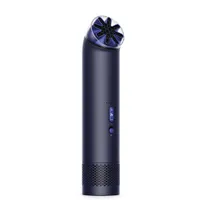
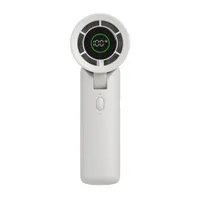
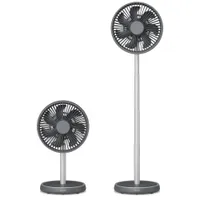
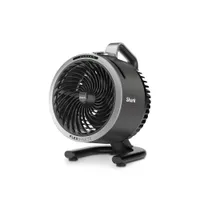
Best of the rest
Not all of the fans we test make it into our shortlist, but that's not to say that they aren't very good options.
Below, I've highlighted other great fans we've tested that just missed out on one of the top slots above.
Glossary
Sometimes when we get into the nitty gritty of how these fans work, we'll use terminology that you might not be familiar with, so I've broken down what the most common jargon means below:
- Oscillation. This is the fan swings from side to side (or up and down in some cases). The degrees it swings through and the direction can compare from fan to fan. In most cases this is an automatic feature, but in others you may have to alter the direction of the fan's airflow manually.
- AC/DC Motor. The motor is what power a fan's movement, and with fans you will usually get one of two varieties, AC or DC. AC motors are usually found on more affordable models that are often a little noisy and tend to offer stepped speed control, like low, medium and high. DC motors, on the other hand, are usually quieter and more energy efficient, and can be used to offer more precise speed control. As such, they tend to be included on models with a higher price tag.
- Wind speed. Modern fans come with multiple wind speed settings to help you personalise your comfort levels, but the number of settings can vary from about 3 to upwards of 30. That means the strength of the wind the fans produce can vary wildly. We take our own wind speed recordings using an anemometer to measure the wind speed in the lowest and highest settings of each fan we test to help you compare.
- Air displacement. This means how much air a fan can circulate in a given time frame, and is usually measured in m3 per hour. The higher the number, the more powerful the fan is. Not every fan will stipulate this figure, so to provide comparison, we have instead measured wind speed for the purpose of this buying guide.
- Noise. The sound a fan makes is measured in decibels (dB), but the reality is that many modern fans are super quiet so it can be hard to compare which is the quietest. We measure all the fans we test using a decibel meter, and these results may differ from the noise level stated by a manufacturer, due to the fact that we are testing in a real home environment rather than a lab setting.
Should you get an air circulator or a fan?
You might see some fans referred to as air circulators, which then raises the question as to which one you should buy. And while it might seem like marketing terminology, there is actually a difference between the two. While all air circulators are fans (the umbrella term), not all fans are air circulators.
Traditionally, fans direct air forwards and may have some horizontal oscillation capabilities to widen the scope of the air direction. But you can only really feel the benefit if you are sitting in the path of the air flow.
Air circulators, on the other hand, offer multidirectional oscillation (and usually a broader scope of movement) to help bounce air off walls and the ceiling, moving much more air and creating a more pleasant environment in the whole room, rather than just in the path of the air flow.
You can pick up an air circulator for less then £50, but prices can go up to close to £200. Those at lower prices may not be as quiet, or have quite the range of automatic oscillation as the more expensive models.
How to choose the best fan for your home?
To choose the right fan or air circulator for your home there are a few things to consider.
- Where and when do you want to use your fan? Different types of fans are best suited to different locations so it's important to think about where your fan will be situated. If you want something for a home office, a small desktop fan may be ideal, whereas if you want to cool a large family living room, then a pedestal air circulator would be more suitable. If you are short on, or too far from, plug sockets, then a cordless fan will give you the flexibility you need. For a fan in the bedroom, something whisper quiet is a must.
- How quiet do you want it to be? Everyone has a different tolerance to sound, and it's worth considering yours before you buy a fan, and this largely comes down to the type of motor the fan has. As Chris Michael, managing director of air quality specialist Meaco, says 'A DC fan is more expensive to manufacture than an AC fan but for the consumer, they are much better. A fan with a DC motor will be quieter, use less energy to produce the same results, tend to be more powerful, can offer more variation in fan speeds, and should last longer'.
- How do you want to control it? At the budget end of the scale, you'll likely find a fan with only on-board controls, so you'll have to get up and adjust the settings manually every time you want to change them. As you get to the mid-point range in terms of price, you may find that your fan comes with a remote control. Generally, the more expensive fans will have both on-board controls and a remote, with a whole host of additional functionality on an app, with the addition of voice control via a smart speaker. Looking out for a timer function can also be useful if you want to fall asleep with a fan on, but not leave it running all night.
- How energy efficient is it? In terms of wattage, fans don't tend to use much, especially compared to energy guzzlers like tumble dryers and washing machines. But some come with additional eco features, like automatically adjusting wind speed based on ambient room temperature, that can make them even more energy efficient.
- How much do you want to pay? Price will be an important consideration, but try not to let it be the only factor in your decision. Choosing a fan that is the right price but doesn't quite meet your needs means you are more likely to be dissatisfied and invest in an alternative down the line.

FAQs
Should I buy a fan or a portable air conditioner?
Whether you should buy a fan or a portable air conditioner will depend on what you are trying to achieve.
If you want to reduce the ambient temperature and moisture levels in a room, then a portable air conditioner will be needed to get the job done. They need to be vented out of the window to expel the hot air, are both sizeable to move around and noisy to run, and they are generally more expensive. These are most likely to be used in the height of the summer during a heatwave, where a fan just isn't sufficient.
Fans on the other hand are designed to circulate air, which is something that can be desirable all year long. Encouraging air movement can make your home feel fresher and the feeling (and gentle sound) of a fan can be soothing when you are trying to sleep. While the price of a fan can vary, then do tend to be more affordable than portable air conditioners, easier to move around, and quieter to use.
How we test
Our team of reviewers tested a range of the best fans on the market, from a variety of brands. We like to make sure we test various types of fans with a range of price points to make sure there is something for everyone on this list.
Fans are tested in real home environments for a minimum of two weeks. It may be tested in one room, or in various rooms if we are testing a fan during the day, and overnight in a bedroom setting.
As part of the testing process, we use a mixture of personal assessment and measured results, and we have updated our testing process for 2026.
We also track all of the specifications and additional functions of all of the fans we test to allow for easy comparison between products, whether that's between competitor fans or newer versions of existing models.

Fan testers

As well as being Ideal Home's Renovation Editor, I also lead on all of the website's heating and cooling content, which means I'm well versed in what it takes to keep your home a comfortable temperature year round and how you can do that in the most energy efficient way possible.
I regularly test fans in my 1970s three-bed home, including the Meaco Sefte Pedestal, the Pro Breeze AirFlo, and the Duux Whisper 3.

Jenny is Senior Digital Editor at Ideal Home and has been since 2023. She has reviewed everything from steam cleaners to fans. She tested the Dyson Purifier Cool and the Shark FlexBreeze HydroGo in her family home.

Joanne regularly test home and garden products for UK and US websites, including Ideal Home, Top Ten Reviews, and Live Science, evaluating the quality of home and garden gadgets by putting them through their paces in a natural home environment.
She tested the Dreo Polyfan 508s in her busy family home and gave it 5 stars.