My neighbour’s hedge is over two metres tall – can I make them cut it down? Experts say it depends on the type
The best next steps for evergreen and deciduous hedges


Is a neighbour’s hedge overshadowing your garden? And is it over two metres tall? You’re probably wondering whether you can ask them to cut it down – and what to do if they don’t.
The rules around whether or not you can cut your neighbour’s hedge are one thing, but if you’re hoping that they’ll do it themselves, there are a few steps you can take to make that happen. You’ll just need to go the right way about it – and make their hedge fits the right criteria.
I spoke to the legal experts to find out where you stand.

Hedges are one of those garden features that can cause neighbour disputes because they can infringe on a space without physically entering the bounds of that space. They’re often to blame for blocking sunlight from your garden, for example – and if your neighbour’s hedge is over two metres tall, you’re probably wondering whether you can make them cut it down.
The answer isn’t exactly straightforward. You’ll need to make it’s the right type of hedge, for one – because deciduous hedges (the ones that lose their leaves during the colder months) are trickier to bring down with help from your local authority.
‘The relevant law is the high hedges legislation under Part 8 of the Anti-social Behaviour Act 2003, but it only applies to a specific type of hedge: two or more trees or shrubs, mostly evergreen or semi-evergreen, over two metres tall, and acting as a barrier to light or access,’ explains Andrew Boast, founder of SAM Conveyancing.
So, what happens if your neighbour’s hedge (or hedges) meet that criteria? First, as with any neighbour's garden habit that annoys you, it’s best to speak to your neighbour directly and try to come to a mutual agreement.
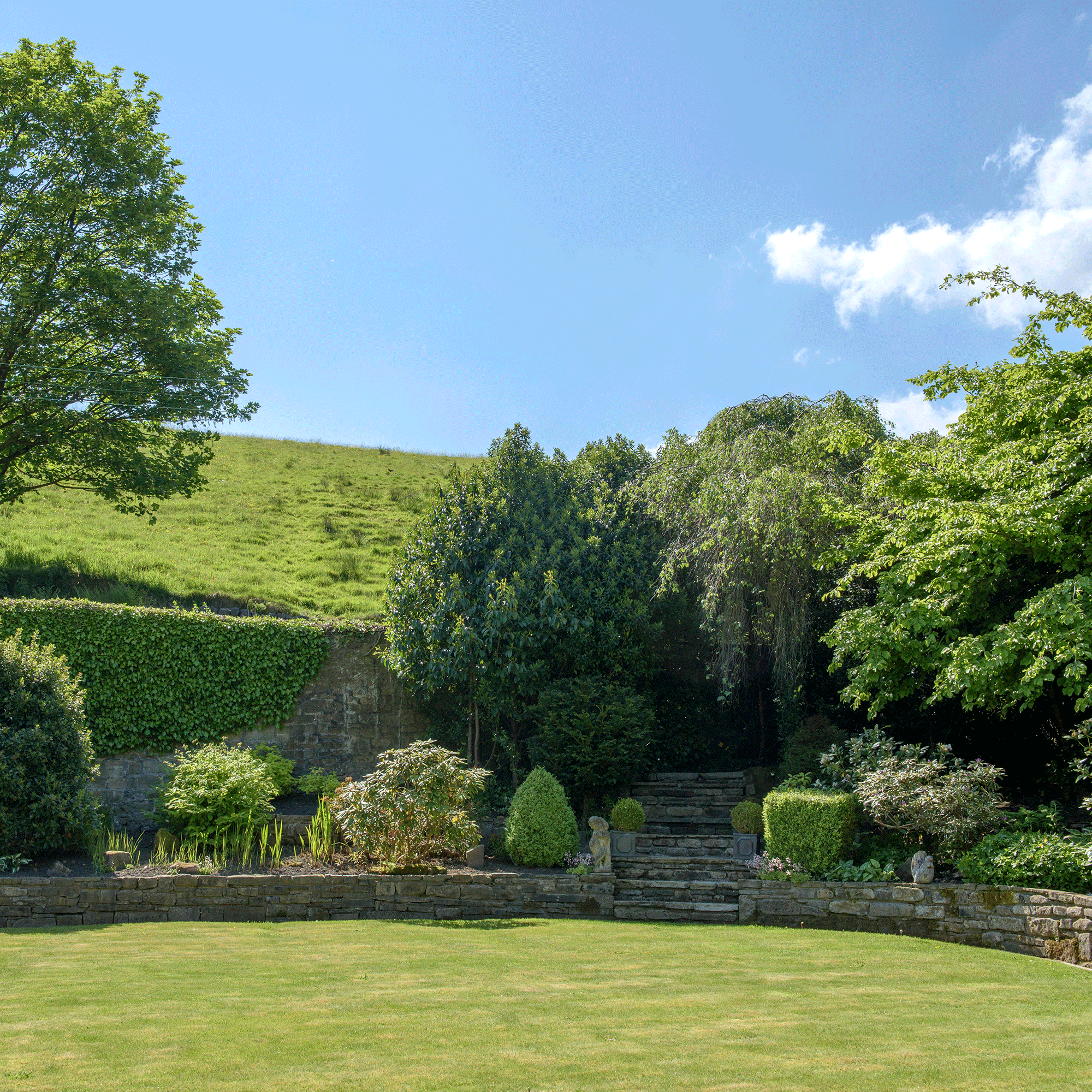
‘The local authority will generally expect reasonable attempts to have been made to resolve matters before accepting a high hedge complain,’ says Sarah Dodd, founder and CEO of Tree Law Solicitors. ‘If the hedge is not evergreen or mostly evergreen, or does not fall within the high hedge regime, it can be much more difficult to compel work simply because of its height.’
If that fails, you can report the issue to your local authority.
‘In that situation, you can ask the local authority to assess the impact the hedge is having on the reasonable enjoyment of your property, including the extent to which it is blocking light,’ advises Sarah.
Evidence, though, is key, and as Andrew explains, you’ll need to ‘Keep a record of everything, along with a photograph of the hedge at different times of year, because if the case does end up in front of the council, you’ll need evidence that you’ve made an actual effort before escalating.’

Sarah also notes that there are other reasons a local authority might be able to intervene. If your neighbour’s tree is damaging your fence, for example, it’s worth gathering structural evidence.
‘The council will then review and send someone out to assess the hedge against those legal criteria and decide whether it's unreasonably affecting your home or garden,’ says Andrew.
‘If they agree with you, they’ll issue a remedial notice telling your neighbour what height to bring the hedge down to and by when. The council can’t order it removed entirely or cut below two metres, only reduced enough to fix the specific problem it's causing.’
Andrew also explained that your neighbour could be fined up to £1,000 for ignoring a remedial notice – and after persistent ignorance, the council could even enter the land, bill your neighbour and complete the work themselves.
What about deciduous hedges?
We’ve already established that deciduous hedges aren’t covered under Part 8 of the Anti-social Behaviour Act 2003, but Andrew says that doesn’t mean you can’t do anything about an enormous deciduous hedge like beech or hawthorn.
‘If your neighbour’s hedge is deciduous, you're looking at common law nuisance rather than the high hedges route, which is a different and often slower conversation,’ he explains.
Above all else, remember that it’s an offence to prune your neighbour’s tree on their side of the fence – and the same applies to hedges.

‘It's also worth knowing that trespass isn't limited to physical entry, and leaning over the boundary or letting a ladder overhang into their garden counts as trespassing into their airspace, even if you never actually step onto their land,’ Andrew adds.
If the hedge is entering the bounds of your garden and you do want to trim it yourself, it’s worth notifying your neighbour first, and making sure that any cuttings are offered back to your neighbour before you throw them in the bin (since it’s still their property!).
Hedge pruning essentials
If the branches fall on your side of the fence (and you offer the cuttings back!).

Bypass secateurs are suited to pruning thinner green stems.

A tough pair of gardening gloves to protect your hands.

This 2-in-1 pruning saw and lopper is ideal for thicker branches.
So, if your neighbour's hedge meets the above criteria, there are steps you can take to have it trimmed.
