How to make a lamp look more expensive without spending a lot of money – 5 styling tricks from pro designers
These simple tips will transform the look of your lamp


We all know the power of good lighting, but that doesn't mean we need to go out and buy a spanking new lamp at a premium price point. Instead, there are plenty of tricks that designers use to make a lamp look more expensive - without spending a lot of money (and in some cases, without spending any money at all).
Hot new lighting trends aside, the best ways to get the most from our lighting tend to also be the simplest. With a couple of budget-friendly swaps and clever styling tricks, our lamps can end up looking way more luxe than they did previously.
So whether you're after a budget-friendly way to upgrade your living room lighting ideas, or you simply want to switch up the look of your favourite lamp, these expert tips can help.
1. Swap the bulb

Initially, we might think making a lamp look more expensive comes down to how it looks on the outside - the stand, the shade, the wires, etc. etc. - and while all of that stuff definitely plays a part, it's just as (if not more) important to think about the bulb itself.
According to Julian Page, Head of Design at BHS, 'one of the most effective ways to make a table or floor lamp look more expensive is to use a warm white LED bulb, typically around 2700K–3000K. This creates a rich, inviting glow that mimics high-end hotel lighting, avoiding the harsh, cold tones that can make a room feel clinical.'
So, first thing's first, make sure you've got the right bulb. This is an easy way to give your lamp a glow-up, without spending a lot of money - you can get 6x 2700K warm light bulbs for just £12.99 on Amazon, for instance.
2. Upgrade the shade

When we look at a lamp, it's mainly the shade our eyes are drawn to. As most of these are detachable from the stand, swapping this out for a prettier design is one of the most effective ways to make your lamp look more expensive.
There's plenty room to get creative here, too. 'The key is to choose something that feels considered and designer-led, such as a pleated fabric shade in a bold floral, subtle stripe or graphic geometric,' Emma Deterding, Founder and Creative Director of Kelling Designs advises.
'Even the most neutral base will feel elevated when paired with a textured linen shade, while rich jewel tones or statement prints will add depth, character and eye-catching detail.'
Some of our favourite lamps - such as these expensive-looking Habitat lamps - are bold in colour, so don't be afraid to pick a non-neutral shade.


3. Banish surrounding clutter

A lesser-known trick to make your lamp look more expensive is to simply remove any clutter surrounding it. Sarah Ross, Co-Founder and Creative Director of Addison Ross, says this will work wonders for any lamp in the home.
'The area around the lamp should feel thoughtfully styled, allowing it to become a focal point rather than competing for attention among other objects,' she explains.
This is especially true for bedroom lighting - we can go to a lot of effort to find the right lamp for our bedside table, but it won't shine to it full potential on a cluttered surface. If this sounds familiar, take some time to remove some items from the lamp's vicinity. It doesn't need to stand alone by any means, but any large objects that take away from the lamp's aesthetic are a detriment to how expensive it looks.
4. Add a layer underneath

You've probably heard of layered lighting before, but have you thought about literally adding a layer underneath your lamp to help it stand a little taller? This is a clever design trick that makes the lamp - and the area around it - more elevated (literally and aesthetically).
'Placing lamps on a small stack of books or a tray will add depth and presence,' Emma from Kelling Designs says. 'It's a simple trick, but it works.'
Give it a try - it can completely transform the look of your lamp. You can use items you already have in the house and avoid spending a penny.
5. Play around with positioning
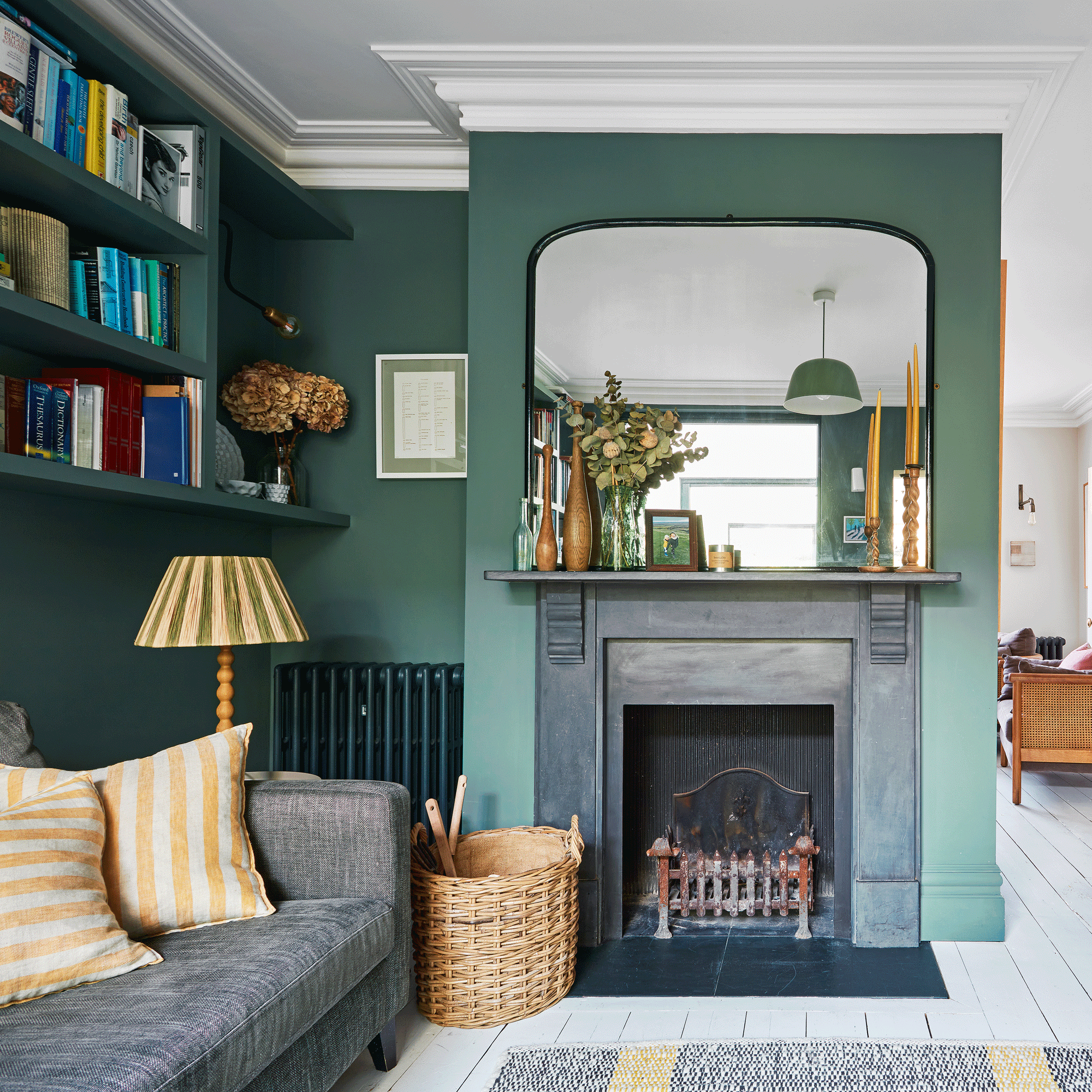
Lastly, where you put the lamp plays a big part in how expensive it looks. Another trick that doesn't cost a dime, this one might involve a bit of trial and error: it's all about finding where you think the lamp looks best.
Pro designer and lighting expert Julian Page suggests styling table lamps 'as part of a curated ‘vignette’ on a sideboard or console table. And for rechargeable lamps, positioning them in unexpected spots like a deep bookshelf or a kitchen island creates a sophisticated, custom-lit look that usually requires expensive electrical work.'
There's definitely a lot more freedom with where you can place a cordless lamp, and there are some great budget-friendly options available. I have this simple rechargeable lamp (£24.99 at Amazon) propped on a pile of books in my living room. It could easily have cost me more than it did, and I think a big part of that is where it's placed: on a coffee table, where the eye is naturally drawn.
That said, traditional plug-in lamps can still be placed strategically. 'I find it effective to place them alongside neutral or natural textures, such as wood, stone, or ceramic,' Sarah Ross suggests. 'Understated materials elevate the overall look and allow the lamp to truly shine.'
Which trick will you be trying to make your lamp look more expensive?
