'Curtain-stacking' is the simple trick experts recommend for making a cold bedroom feel warm and cosy – this is how to do it
It's the key to preventing heat loss this winter


I don't know about you, but where I live, the overnight temperatures have plummeted recently, and that's got me thinking about ways to make my bedroom warmer and cosier this winter.
In cold weather, my windows are always one of the biggest areas of heat loss in my bedroom. However, after speaking with several window-dressing experts, I've found a clever solution.
As it turns out, 'curtain-stacking' is the bedroom curtain idea experts say we should all adopt this autumn – it's a simple trick that can make a cold sleep space feel warmer and is the ideal way to cosy-maxx your bedroom ahead of the winter season.
What is curtain-stacking?

So, what exactly is curtain-stacking? And how can it help to make a cold bedroom warmer?
'During winter, windows can be a significant source of heat loss,' explains Chloe Dacosta, design manager at Blinds2Go. 'To combat this, curtain stacking involves layering multiple blinds or curtains at the window to regulate the temperature (as well as the light) in your bedroom.'
Why does this warm things up? Because 'layered window treatments create additional barriers between the glass and the room, with pockets of air between the layers helping to slow the movement of heat,' says Chloe.
That means curtain-stacking works a little like double-glazing: it creates air layers between each 'stacked' fabric to trap heat and insulate your sleep space from the cold outside.

Plus, as Helen O’Connor, product and trend manager at 247 Blinds, shares, curtain-stacking isn't just a practical solution; it can also help your bedroom to feel visually cosier and can be a great bedroom design idea in its own right.
'Stacking multiple window dressings together is a great way to balance the aesthetics of your home, adding more depth and texture, whilst also acting as a barrier against heat loss,' explains Helen.
'Curtain-stacking is a creative way to protect your home environment while also designing a stylish interior,' Chloe agrees.
How to create a curtain stack
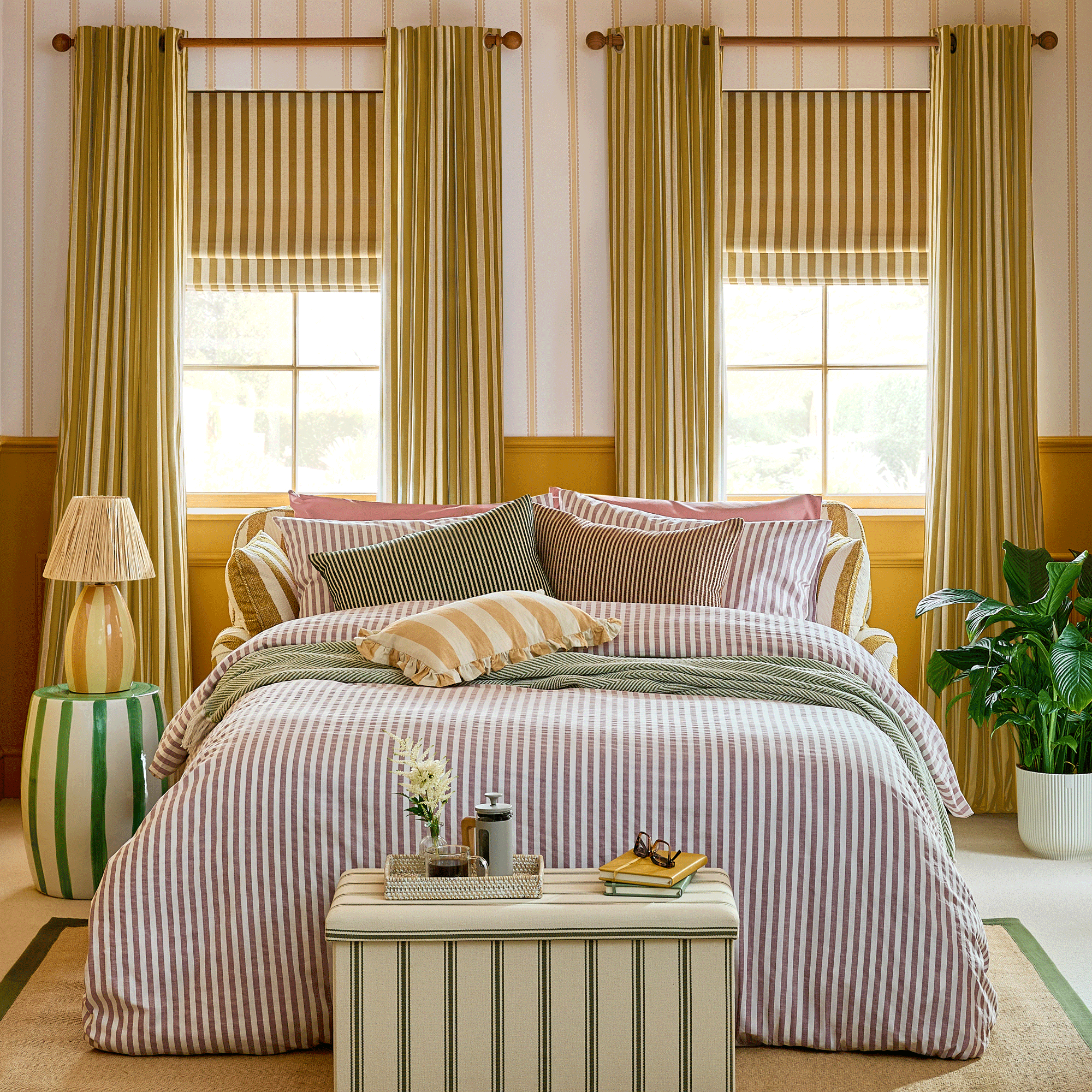
I'm certainly convinced that adopting curtain-stacking will help me to combat the cold winter nights ahead, but how exactly do we go about creating a window stack from scratch?
'To create a stylish curtain stack, look to layer different styles of window treatments and fabrics,' explains Chloe. And, when it comes to layering treatments, Chloe says that three is the magic number.
'For a combination that never fails, layer a roller blind behind a voile curtain and an outer curtain in a thicker fabric,' says the window dressing expert. 'Layering blinds and curtains adds visual interest, creating depth and texture at the window, while also creating a strong thermal barrier to regulate temperature.'
In addition, 'the sheer curtain can provide daytime privacy while allowing softly filtered light into the room,' explains Chloe, 'while the heavier outer curtain can be closed in the evening for extra heat retention.'


When it comes to where to buy bedroom curtains, there are plenty of options out there, but for maximum cosy-making, Chloe suggests choosing thermal blinds or curtains. 'These are designed to insulate the home and maintain temperature, making a room feel warmer and more comfortable during winter,' the design expert explains.
'For the base of your curtain stack, I’d reach for some high-performance thermal blinds,' agrees Helen. 'Thermal blinds are ideal for temperature control through the colder months, insulating your home, and preventing cool draughts from entering through your windows.'
'Adding a second layer, such as shutters or curtains, creates another wall of temperature regulation during cooler spells, whilst supporting the seasonal styling and cosiness of the room,' adds Helen. 'For this, I’d use a heavy, textured curtain.'
'Using different types of layers within your curtain stack means your space is ready for the moments you want to embrace the early morning sunlight, or those when you’d rather keep it snug,' explains Helen, 'perfect for changing seasons.'
And don't forget that your curtain stack can be stylish as well as practical. 'I'd opt for a warming colour palette,' says Helen. 'Think coppery oranges or a deep burgundy; that will add an element of warmth to the natural light that enters the bedroom throughout the day.

'Don’t be afraid to combine different patterns and textures to create contrast,' adds Chloe. 'Or, if you’re looking for a more minimalist aesthetic, try layering different shades of the same colour – if you're not sure where to start, neutral tones are a timeless choice.'
All in all, curtain-stacking is a design solution with both practical and aesthetic benefits, and to my mind, that makes it a bit of a no-brainer for keeping my bedroom looking stylish *and* feeling snug and cosy this winter.
