5 dated curtain trends interior experts and designers say to avoid for a stylish and timeless home
Because no one wants a room that looks like it fell out of a 70s interior catalogue


Curtains often get the short straw when it comes to decorating our homes - they’re usually the last element we plan, and a place we often try to save money. But making your curtains an afterthought is a decorating mistake, as the right curtains (or the wrong ones) can make a huge impact on the overall feel of our properties.
And in fact, forgetting about them entirely means you may accidentally implement one (or all) of the most outdated curtain trends – which in turn can make your whole home feel older, more stuffy, and much less modern and stylish. Yes, the window dressing you choose really can have that big of an impact!
To help you avoid the curtain styles, lengths, colours and materials that will seriously age your windows and home, we spoke to interior designers and curtains experts, who shared their thoughts with us. So if you want to keep your window dressings looking as up-to-date as you can, here are the dated curtain trends you’re best off avoiding, because we’d all rather our homes don’t look like they’re straight out of a 70s interiors catalogue…
1. Curtains that are too short

Unfortunately, nothing quite says out-of-date interiors like a short curtain that stops almost exactly at your windowsill. Though they are still favoured by many - particularly as kids' bedroom ideas - if you want to add a touch of on-trend luxe to your home, long curtain ideas have persisted as the stylish favourite since the 90s.
And there is good reason why the interior experts we spoke to no longer love this trend. 'Short curtains instantly make a room feel dated and can visually cut the height of the space,' Kunal Trehan, interior designer and founder of Touched Interiors says. 'Wherever possible, curtains should run from ceiling to floor, even if the window itself is much smaller.' Debbie Leigh, Design Manager at ILIV, agrees, explaining, 'designs that gently skim the floor create a much softer, more refined look.'
Aside from changing the length of your curtains to avoid this outdated trend, you should also ensure the curtains are hung correctly - just above the window frame - to create a feeling of space. 'Mounting the track close to the ceiling draws the eye upwards, making ceilings feel taller and the room more elegant,' Kunal explains. 'Install a recessed or ceiling-mounted track with curtains that just kiss the floor or create a subtle 1-2cm break for a tailored finish.'
2. Overly fussy curtain details

Unless you’re living in a historic country manor house, the experts explain that fussy and intricate detailing on your curtains is a dated trend you’re best off avoiding in the 21st century.
‘Traditional, overly detailed window treatments are the biggest thing I’d steer people away from now,’ Katerina Tchevytchalova, Founder of K’Arte Design, says. ‘Think heavy voiles, fussy pelmets or anything too ornate. They distract from the rest of the space, rather than adding to it.’
Kunal agreed that overly decorative curtains can very easily date a space, especially in modern buildings. 'Traditional swags, ornate pelmets and fussy tie-backs can overwhelm a room, particularly in contemporary homes.
'Rather than simply dressing a window, curtains are now used to soften a room and add a layer of quiet luxury. The best curtain schemes almost disappear into the architecture, creating flow - rather than demanding attention.'
Instead, the experts suggest embracing simplicity. 'Choose simple wave headings or perfectly tailored pinch pleats on discreet tracks. They create beautiful, even folds that look timeless rather than trend-led,’ Kunal suggests. ‘For pelmets, use a reduced height for a more modern luxe look. And, opt for lighter sheer fabrics for privacy and added light.’ This is particularly helpful if you're looking for living room curtain ideas, as this is a space that doesn't need darkness and privacy as much as our bedrooms.
3. Matching curtains to your other upholstery
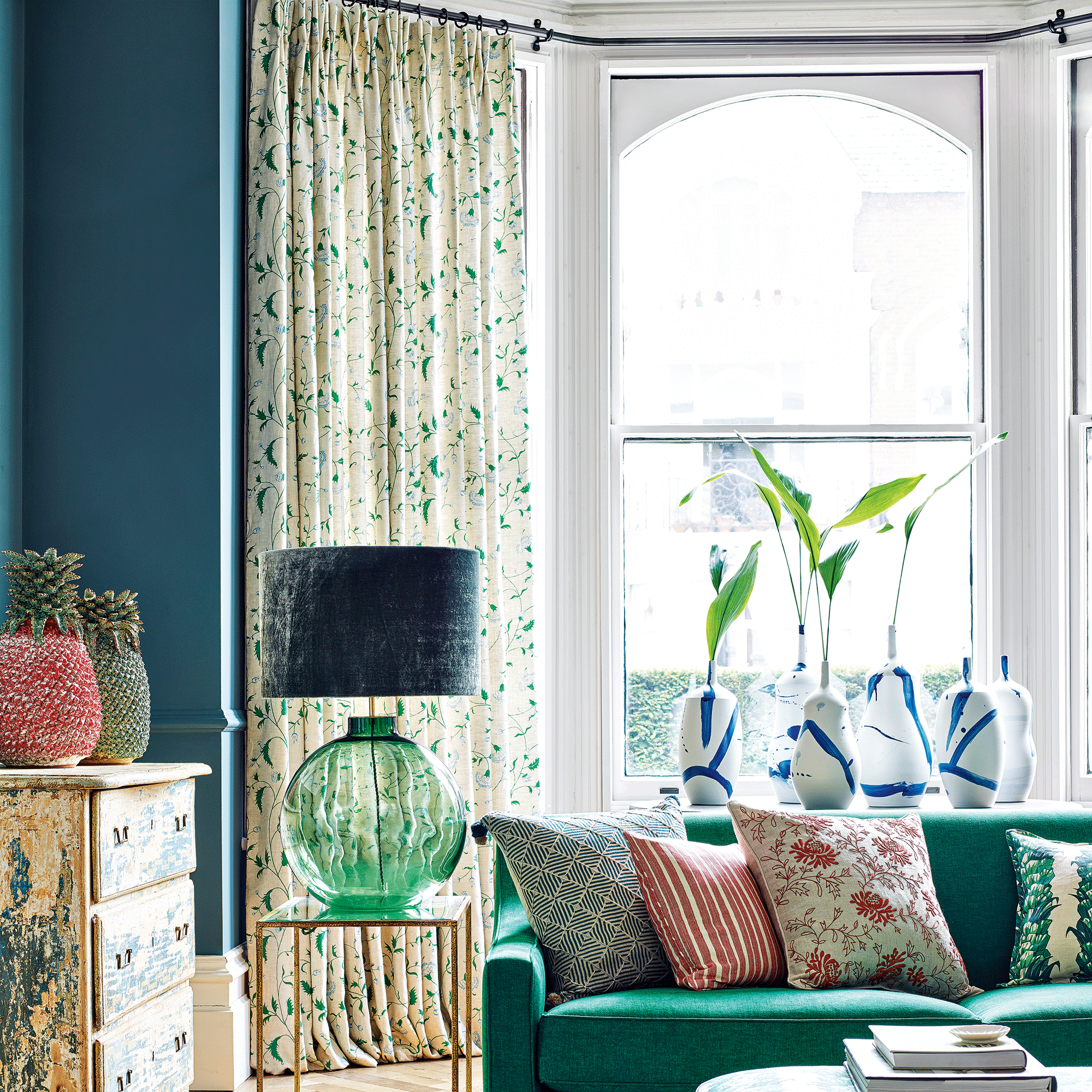
It’s bad news for those who love a matchy-matchy look, unfortunately. ‘One look that has gradually fallen away over the decades is having all your soft furnishings perfectly matched,’ Debbie explains. 'Gone are the days where you matched your curtains to your cushions and upholstery!'
Katerina agrees, explaining, ‘curtains and cushions in matching fabric are another dated giveaway; it makes a room feel overly styled rather than lived in.’
The experts explain that this curtain trend has become dated, as interior experts have come to favour layered personality, rather than copy-and-paste design schemes.
Instead of choosing curtains, cushions, pouffes and sofas in the same fabric, Katerina urged, 'let them relate to one another rather than replicate each other, working within the same colour family but varying the tone, texture or pattern for a softer, more layered look.'
4. Non-functional curtains

The experts explained that one of the most dated curtain ‘trends’ is in fact, choosing window treatments for their look and aesthetics alone. In the 20th century, the priority is for our curtains to be functional, as well as pretty.
‘One of the biggest modern shifts is that our curtains are expected to enhance comfort as well as style, whether that's helping to regulate temperature or soften acoustics, as well as providing privacy,’ Debbie explains.
Barbara Entwistle, Daylight Advisor & Project Development Manager at VELUX agrees, explaining that curtains nowadays need to work with the natural light in our homes, rather than block it out. ‘Heavy, dark drapes, busy patterns and elaborate curtains can make rooms feel smaller and block natural daylight. Instead, many are moving towards lighter, more streamlined options that create brighter, more contemporary interiors.’
In practice, this can mean utilising sheer curtains bolstered by shutters, to let in light as and when needed, and offer increased privacy from neighbours. And these days, curtains may not even be the best option at all for modern light, temperature and privacy requirements. 'Today, blinds can offer a sleek finish while giving greater control over daylight and privacy, with many modern options now also allowing adjustments to light levels and shading throughout the day,' Barbara explains.
‘External shading, such as shutters, can also help stop the sun’s heat from entering before it reaches the glazing.’
5. Crushed velvet curtains

There aren’t many materials that are a huge no-no for curtains, but interior designer at Furniturebox, Laura Rich, explained that crushed velvet is one exception and an example of a truly outdated curtain trend, despite its huge popularity a few years back.
‘Crushed velvet curtains are one of those interior trends from the 2010s that surged to popularity, drawing inspiration from the 70s boho and 90s grunge aesthetic. But its lifecycle as a trend was extremely short-lived,’ she explains.
‘Crushed velvet became hugely popular due to its association with hotel-style luxury, but it hasn't aged particularly well. It’s highly reflective, and the fabric appears synthetic.’
Instead, natural fibres make for a great material alternative for curtains, Laura explains. 'In 2026 we’re opting for more comfortable fabrics that are nature-inspired, like linen or a linen blend to keep the room cool but cosy and fresh. They diffuse daylight beautifully, and they’re effortless and timeless. Choosing a natural fabric in a timeless neutral will almost always outlast trend-led finishes like crushed velvet.’
As with anything in interiors your curtain choice will be a matter of personal taste. But if you're at a loss of where to start or can't put your finger on what looks a bit off in your room, your curtains could be to blame.
