Your birth month has a houseplant – this is the meaning behind yours and how to grow it in your home
It's time to find out your birth month houseplant, once and for all


From wedding plants to housewarmings and milestone gifts, houseplants have long been associated with symbolism, sentiment, and personal meaning. But did you know there's such a thing as birth month houseplants?
Oh yes, just as birthstones and birth flowers carry specific associations, one of the biggest houseplant trends for 2026 is linking birth months with the indoor plants that reflect the mood, energy, and seasonal shift of that time of year.
Rather than choosing plants purely for aesthetics, birth-month houseplants offer something more thoughtful: a living reflection of growth, resilience, abundance, and renewal. Many of these plants are also highly collectable, making them especially appealing to plant lovers who enjoy curating a meaningful indoor jungle.
Find your birth month houseplant
To guide us through all twelve months of the year, plant expert Sandi Liang of Dandi Plants and Palmstreet, the community-obsessed live shopping app for rare plants and more, shares her insights on the symbolism and care of each chosen plant.
Here's what you need to know...
January – Monstera obliqua

January is all about fresh starts, intention-setting and quiet reinvention, and few plants embody that energy quite like the Monstera obliqua. Delicate, architectural and famously rare, it’s a plant for those who appreciate patience and long-term care.
'This ultra-rare plant has a delicate arrangement, and is a true collector’s item for many plant owners, symbolising growth and reinvention, making it the perfect plant for the start of the new year,' says Sandi.
She adds that this plant prefers well-draining soil that is rich in organic matter, and that you should 'make sure to allow the soil to dry out almost completely before watering so it doesn’t sit in excess water'.
'Monstera obliqua prefers higher than average humidity for optimal growth. Provide your plant with plenty of bright indirect light,' she finishes.

February – Peace lily

With its glossy green leaves and elegant white blooms, February’s plant feels well-suited to a month associated with care, connection and quiet renewal. Peace lilies are known not just for their understated beauty, but for the sense of calm and warmth they bring to a space: they have long been associated with peace, harmony and new beginnings, which makes them an ideal choice for this time of year.
It’s also one of the most widely grown houseplants, so it’s easy to find and surprisingly resilient. Just offer it a spot with bright, indirect light, pop it in a pot of moist but well-drained soil, and stick it in a warm room with moderate humidity.

March – Alocasia dragon scale

March signals the transition from winter to spring, and the Alocasia dragon scale captures that sense of awakening perfectly. Its jewel-like, textured leaves feel almost mythical, making it a true statement plant.
'This feels truly magical for the March birth month, as the Alocasia Dragon Scale is not only a captivating plant due to its appearance but also serves as a symbol of mystical beauty and natural strength,' says Sandi.
'It's a reminder of the rugged yet beautiful aspects of nature, bringing a piece of the wild and whimsical into your living space.'
She reminds us that this plant requires regular watering, and the soil should not be allowed to dry out. However, it is more tolerant of missing the occasional watering than some other varieties of Alocasia.

April – Begonia maculata ‘Wightii’

The birth month houseplant for April is a rare beauty indeed: the polka dot begonia. Playful, uplifting and full of personality, it reflects the creative, optimistic energy of spring in full swing. Its spotted leaves instantly lift a room.
'This joyous and creative plant has polka-dot leaves for a pop of colour to any indoor space and boosts your mood,' suggests Sandi. 'A begonia maculata thrives in a really humid environment.'
If the air in your home is dry, she urges you to consider using a humidifier or placing a tray of water near the plant to increase humidity levels. And, if you're lucky enough to have a bright bathroom, Sandi promises that's the perfect spot for a polka dot begonia.

May – Philodendron gloriosum

Soft, creeping velvet leaves and understated luxury make this philodendron a perfect fit for May, especially as it's a month associated with connection, beauty and growth.
'This luscious plant serves as a reminder to pay attention to the details in our lives,' says Sandi, who points out that some philodendrons can even be grown as indoor hanging plants, like the heartleaf philodendron.
'Make sure to prioritise fertilising it during spring and summer to encourage new growth. These plants also don't enjoy sitting in oversaturated soil, as it can cause houseplant root rot and turn your philodendron yellow,' she finishes.

June – Calathea

June’s birth month houseplant is vibrant, expressive, and constantly evolving, much like early summer itself. With striking patterns dancing across each new leaf, every growth spurt feels like a fresh chapter unfolding in your home.
'It’s not just about the plant growing; it’s about you growing with it,' says Sandi poetically. The Calathea’s ever-changing foliage invites mindfulness and attention, encouraging a gentle, reflective rhythm to your daily routine. And its colour and movement bring an early summer energy that feels alive and uplifting.
This plant thrives in bright, indirect light, but be cautious against direct sunlight, which can scorch its delicate leaves. Take a look at exactly where to place it.

July – Snake Plant

Bold, architectural, and unapologetically striking, July’s birth month houseplant is the Snake Plant, a living emblem of summer confidence and abundance. Especially as its upright, golden-edged leaves symbolise strength, resilience, and prosperity.
Caring for a Snake Plant is refreshingly simple. Place it in bright, indirect light to highlight the golden variegation, but it will also tolerate lower light conditions, making it incredibly versatile.
Water sparingly, allowing the soil to dry completely between waterings, and keep it away from cold drafts or sudden temperature changes to ensure its bold leaves remain healthy and vibrant.

August – Scindapsus
August brings a slower, more reflective energy, and this silvery-leaved birth month houseplant mirrors that calm beautifully.

'With thick, silvery leaves, this rare and resilient plant is a luxurious and sophisticated addition to your home that not only brings a serene elegance to your space, but also symbolises the subtle interplay between light and shadow and the beauty of quiet growth,' says Sandi.
She adds that something like the Scindapsus treubii ‘Moonlight’ variety is particularly striking, although this plant loves bright, indirect light and prefers above average humidity. It should still thrive, though, in an average household environment.
September – String of Pearls

Utterly refined, it’s little wonder this birth month houseplant is such a natural fit for September’s grounded, thoughtful mood.
With its delicate, bead-like leaves cascading like a gentle waterfall, the String of Pearls is more than just a visual delight: it embodies mindfulness, quiet reflection, and the beauty of patience. Traditionally, trailing plants like this have been associated with abundance and continuity, making them a symbolic choice for homes that welcome calm and considered energy.
'Those tiny, spherical leaves aren’t just pretty,' says Sandi, 'they remind us to slow down, appreciate detail, and enjoy the small joys of life.'
Caring for a String of Pearls is surprisingly straightforward, though it does benefit from a little attention. Plant it in a well-draining succulent mix, allow the soil to dry out almost completely between waterings, and give it bright, indirect light. With a touch of care, its elegant tendrils will spill gracefully from hanging pots or shelves, bringing both beauty and a meditative charm to any space.

October – Darker Philodendrons

Philodendrons, particularly those with dark, dramatic foliage (our hearts belong to the black cherry pink princess), are a natural autumn plant and thus an ideal birth month houseplant for October babies everywhere.
'This plant is dark and mysterious during the fall. Embracing something like the Pink Princess Philodendron in your home is like celebrating modern femininity and empowerment, as the plant's lush pink leaves are a symbol of grace, beauty, and renewal, resonating with the natural world's subtle power,' says Sandi.
To keep your philodendron happy, Sandi says to consider placing it near a humidifier, grouping it with other plants to naturally raise humidity, or setting it on a pebble tray filled with water.
'Regular misting can also help in drier climates, but avoid overdoing it to prevent fungal issues,' she adds.

November – Ivy
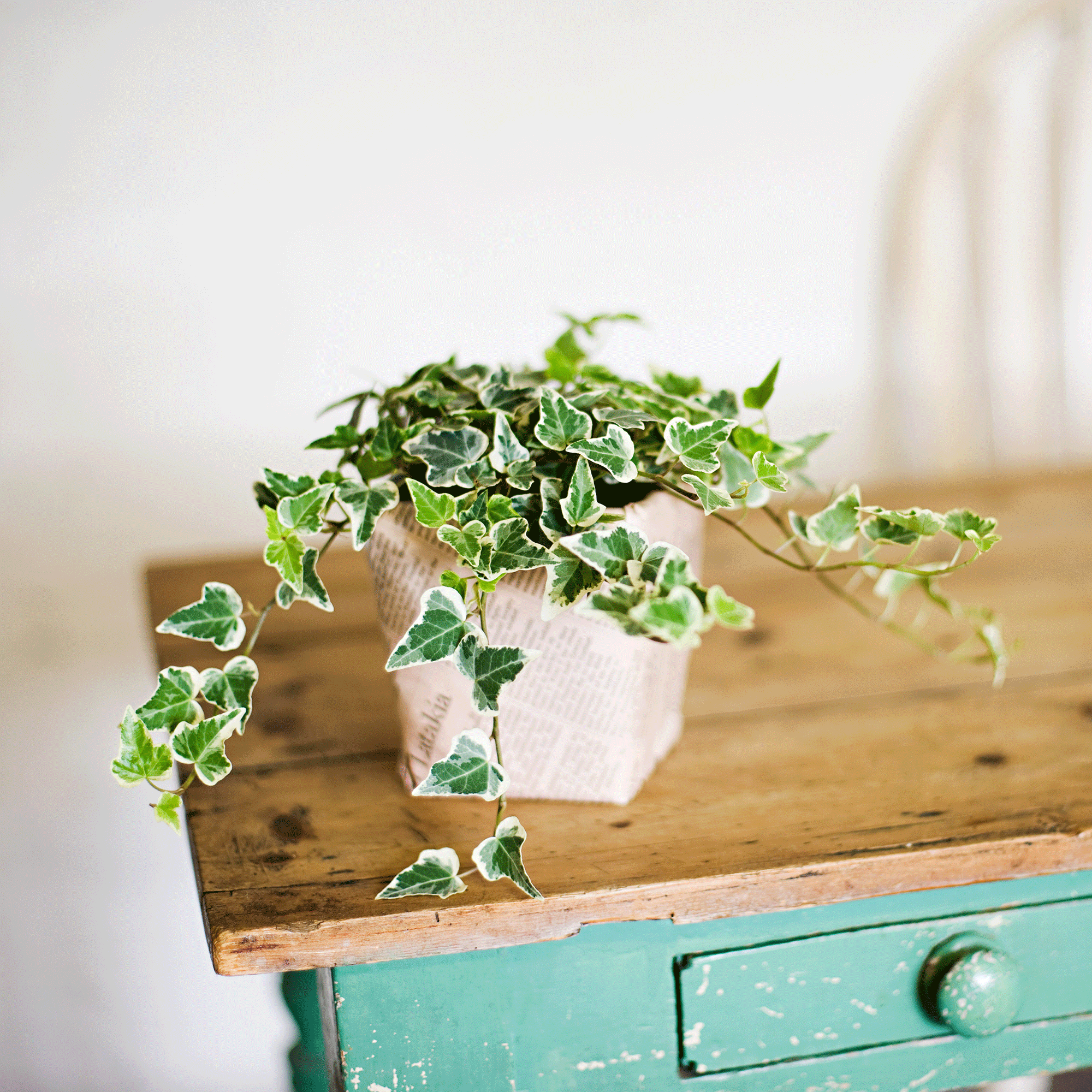
Trailing, resilient, and full of meaning, November’s houseplant pick is the timeless ivy, a natural symbol of connection, longevity, and enduring friendship.
'I love this beautiful plant,' muses Sandi. 'It's like sending a bouquet that doesn't wilt.'
Ivy is perfect for hanging baskets, shelves, or as a climbing feature, adding elegance and life to any corner of the home. And better still, caring for ivy is straightforward. Place it in bright, indirect light, keep the soil lightly moist without letting it become waterlogged, and make sure it’s planted in well-draining soil.
Give it time, and it will trail, climb, and flourish, bringing both beauty and symbolism to your living space.

December – Christmas cactus

Dramatic white variegation and festive flair make the Christmas cactus albo a fitting birth month houseplant to end the year, as it feels as abundant as it does celebratory.
'This is more than just a plant; it symbolises growth, abundance, and a deep connection to nature. Incorporating this beauty into your home decor can evoke feelings of vitality and harmony,' suggests Sandi.

FAQs
Are there birth month plants?
'Traditionally, birth month plants tend to be flowers laden with meaning,' says Christopher O'Donoghue of Gardens Revived.
Traditionally, he notes that the following blooms tend to be associated with each month of the year: snowdrops for January, violets for February, daffodils for March, daisies for April, lily-of-the-valley for May, roses for June, larkspur for July, poppies for August, asters for September, marigolds for October, chrysanthemums for November, and holly for December.
'The plants usually tend to be in season at the relevant times of the year,' he adds. 'However, there are many more versions, and people keep coming up with fun new ideas, like birth month fruit trees, so there's lots to choose from!'
Which plant should I plant on my birthday?
While you could plant something laden with meaning, Christopher O'Donoghue of Gardens Revived says the best plant to plant on your birthday is a) one that is best suited to planting that month, and b) one that you love and are happy to care for.
'I planted trees to mark the births of my daughters,' he said, 'but I waited until it was bare root season to give them the best chance to thrive. The meaning is still there, though!'
Whether you choose to believe in symbolism or simply love discovering plants with a story behind them, birth month houseplants offer a more personal way to grow your indoor collection.
Think about it: they make thoughtful gifts, work well as meaningful additions to your own home, and always serve as a gentle reminder that we all grow at our own pace, in our own season. Just like plants.
Hey, if you’ve ever needed another excuse to bring one more houseplant home, consider this your sign.
