If your rosemary plant has gone woody and patchy, garden experts say this is exactly what you need to do to get it looking healthy for summer
If you're desperate to bring a woody rosemary back to heel, there are a few tips and tricks you can try...

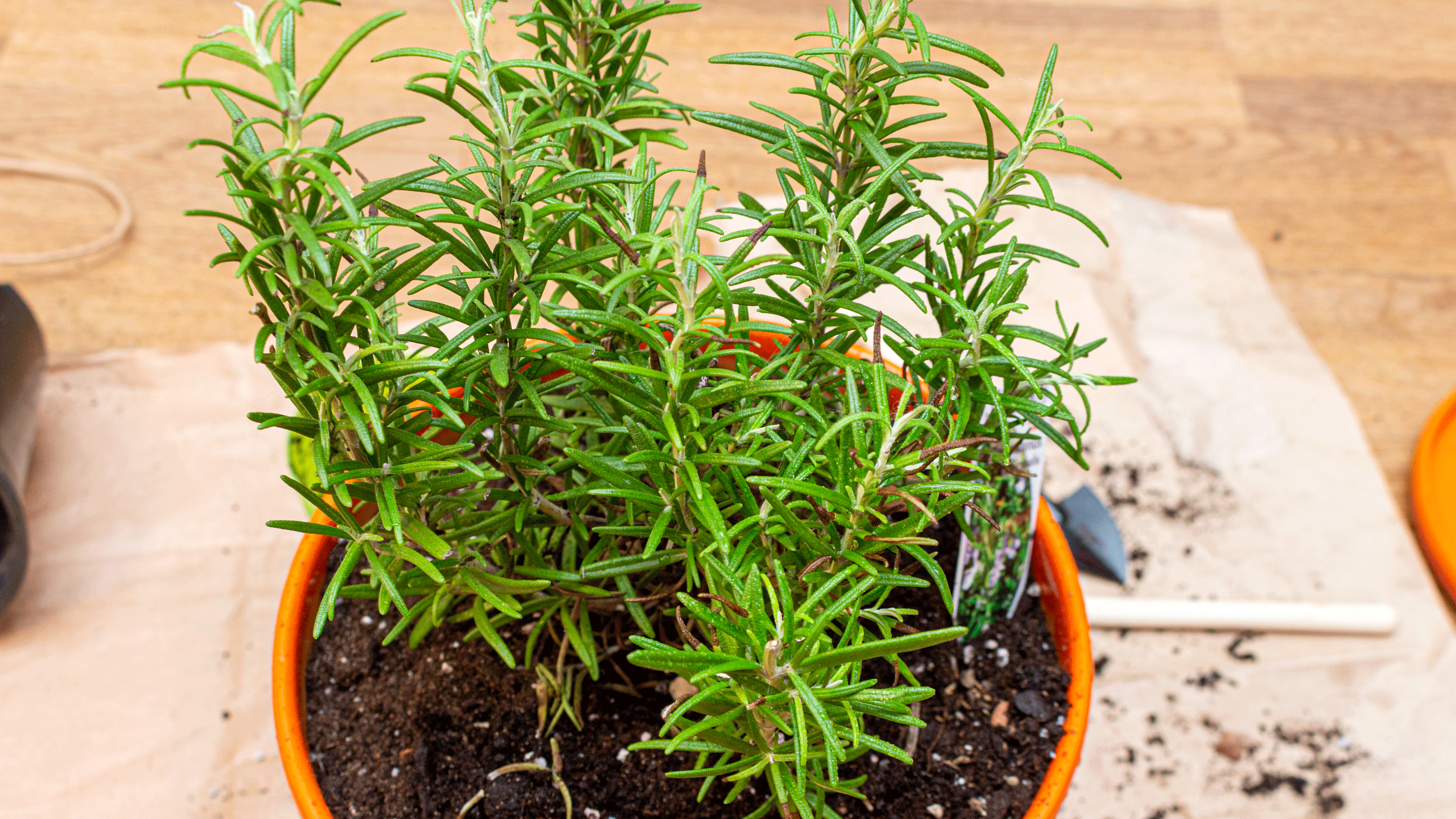
Can you revive a woody rosemary? It's one of those questions that even the very best gardeners find themselves googling, particularly as this herb is one of those plants you expect to just… keep going. When it doesn't, it really whips the rug out from under you!
Hardy, fragrant, and famously low maintenance, growing rosemary is a staple in gardens and on sunny windowsills alike. That's why so many hail it as being one of the easiest herbs to grow, in fact. Over time, though, even the healthiest plant can start to look tired, woody, leggy, and a little sparse in all the wrong places.
Sound familiar? Well, if your rosemary has become all brown stems and very little leaf, it’s easy to assume it’s past saving. However, that woody look is actually a completely natural part of the plant’s growth. The trick is knowing how to work with it, rather than against it.
Can you revive a woody rosemary?
'Rosemary is a woody perennial shrub, so it’s completely normal for it to become woody as it ages,' explains Christopher O'Donoghue, director of Gardens Revived.
'But if it’s looking leggy, bare in the middle, or just not thriving, it usually needs a bit of rejuvenation.'

A gardener with over a decade of experience under his belt, Christopher set up Gardens Revived with his brother, Andrew, in 2018 to create a thriving family business. He has since worked on residential gardens, listed buildings and gardens, award-winning RHS flower show gardens, and large estates with some exceeding 70 acres – many with historical significance.
The key thing to understand? Rosemary won’t regenerate from old, bare wood, so reviving it is less about cutting it back hard, and more about encouraging the healthy growth that’s already there.
With that in mind, then...
1. Start with careful, strategic pruning
Pruning rosemary is the most effective way to bring a woody rosemary back into shape, but it needs a light touch.
'The most important thing is to find where the green growth ends and the woody stems begin,' says Christopher. 'You want to cut just above that point, making sure you leave some green growth on each stem.
To do this, you will need:
- The best secateurs: the Wilkinson Sword Comfort Ratchet Pruner from Amazon are ideal for woody stems.
- A pruning saw, like the Silky Zubat Professional
- A bag for your clippings
Remember: cutting too far into old wood can do more harm than good, as those sections are unlikely to produce new shoots. Instead, focus on reshaping the plant and encouraging bushier growth from the leafy areas.
Christopher also recommends following the one-third rule, which essentially states that you should never remove more than a third of the plant at once. If your rosemary is particularly overgrown, it’s better to prune it gradually over a few months rather than all in one go.
2. Check the roots and improve drainage

If your rosemary is dropping leaves or browning at the tips, the issue may lie below the surface.
'Rosemary naturally grows in dry, rocky conditions, so it really doesn’t like sitting in wet soil,' explains Christopher.
If your plant is in a pot, gently remove it and inspect the roots. Healthy roots should be firm and pale, while dark, mushy roots are a sign of rot and should be trimmed away.
When repotting, opt for a free-draining mix; something like half standard compost and half grit, sand, or perlite works well. And always, always, always make sure your container has good drainage. You can buy perlite on Amazon for £10 a bag to make up your own mix.
3. Rethink how (and when) you water
Overwatering is one of the most common reasons rosemary struggles, especially if it's in a container.
Instead of watering little and often, allow the top few inches of soil to dry out completely before watering again. When watering, give the plant a thorough soak so that moisture reaches the roots, then let the excess water drain away completely.
This mimics the plant’s natural growing conditions and helps prevent further stress.
4. Give it as much sun as possible

Light plays a huge role in how rosemary grows. Without enough of it, plants can become stretched and leggy, making woody stems even more noticeable.
'Rosemary thrives in full sun, so the more light you can give it, the better,' says Christopher. 'I actually just moved a very unhappy rosemary that my wife wanted in a shady spot on my patio to a bed in full sun, and it's perked up no end.'
Excellent advice, but what does it really mean? Well, outdoors, you want a bright, open position. Indoors, a south-facing windowsill is ideal. The aim is somewhere that gets at least six to eight hours of direct sunlight each day. At least.
What do do after pruning rosemary?
Once you’ve pruned your rosemary, a little aftercare can make a big difference to its recovery.
Morris Hankinson of Hopes Grove Nurseries recommends feeding with a balanced, slow-release fertiliser to encourage healthy growth, followed by a deep watering.
Adding a layer of mulch around the base will help retain moisture, regulate soil temperature, and protect the roots. Just be careful not to pile it directly against the stems.
A woody rosemary plant might not look its best, but it’s rarely beyond saving. With a little careful pruning, better drainage, and the right conditions, you can encourage fresh growth and bring it back into shape. If not, take cuttings and start again, ready to get a little more attentive with your secateurs going forward.
