I’m a serial renovator and these are the 6 DIY jobs I'd never tackle in a heatwave – and neither should you
Resist the urge to make certain home improvements during very hot weather – certain tasks are doomed to fail


When the sun is shining it can seem like the ideal time to get cracking on all those jobs around the house that you just couldn't raise the enthusiasm for during the drizzly, gloomier months – I know my motivation for beautifying my own home definitely comes out of hibernation once the clocks go forward.
That said, what I have also found is that even seemingly easy DIY projects can end up going disastrously wrong on a hot summer's day – not just because it is too sweltering to put in the effort required (flashback to building the garden deck on the hottest day of the year a while back), but also because high temperatures just don't suit certain DIY tasks.
In some cases, attempting to pursue jobs around the house in the heat can actually be a total waste of time and effort, with the results of all that hard work being really disappointing, meaning you just have to do them all over again. Here are the tasks that I, and the experts I spoke to, would never tackle during a heatwave – save your energy and enjoy the sun instead.
1. Any type of painting – especially outside

When the sun comes out two things happen at my house. Firstly, everywhere is brighter, meaning all the areas that have started to look scruffy and in need of zhuzhing up become glaringly obvious. Secondly, I am overcome with a need to give everything an general overhaul as the seasons change.
All of this often results in quite a few painting jobs to change the colour scheme – painting walls and the front door usually comes first, but also the exterior woodwork that seems to need repainting annually. However, according to Justin Brown, founder of Timber Shelves, a hot day is the worst time to carry out any kind of painting. 'It's when painting exterior walls that we see the most avoidable damage during summer. Exterior paint dries in minutes when temperatures rise above 30°C and this prevents the paint from adhering to the surface. This leaves lap marks and bubbles that can't be corrected with a second coat.
'Moving inside, the risks do not disappear,' adds Justin. 'When painting the interior in hot weather, the paint will skin over before it can be levelled, even with a good paint roller, and will result in streaks.'
Having experienced this first-hand, I am keen to know when, in fact, I should be tackling this task instead. 'The best time to paint the exterior in the UK is from mid-September to mid-October, when the temperature range is 10°C to 18°C,' says Justin.

Justin Brown is a joiner-turned-entrepreneur with over 15 years of hands-on experience in wood, joinery, and bespoke furniture manufacturing. He is the founder and owner of Timber Shelves, a UK-wide business specialising in the design and crafting of handmade solid timber shelving who also help UK homeowners with a wide range of home improvement and DIY projects. In addition, Justin serves as Managing Director of Essential Woodwork Limited, where he oversees the design and manufacture of custom wooden furniture and home accessories, all crafted from sustainably sourced solid timbers.
2. Laying wooden flooring

If you are considering installing your own wooden flooring, a heatwave is not the time to be doing it. Even engineered timber, which is more structurally stable than solid planks, can be affected by high temperatures.
DIY specialist Pete Bell, who runs DIY channel BuiltByPete, explains why this is a job to avoid. 'Wood is naturally a hygroscopic material, which for us DIYers means it constantly absorbs and releases moisture. High temperatures cause timber planks to expand quite a bit. So, if you install solid or engineered wood flooring during a heatwave the boards will have nowhere to move as they swell causing buckling or splitting.'
Along with avoiding laying timber flooring during a heatwave, it is also important, in any weather, to allow it to acclimatise before fitting – otherwise you risk ruining all your meticulously-planned wood flooring ideas. That means you can't just unwrap it on delivery and starting putting it down. Ideally, the room temperature should sit somewhere between 15°C and 24°C, with humidity levels at around 40 – 65%. Flooring should be unwrapped and stacked in a lattice before being left for between 7-14 days.
With a background is in engineering Peter's enthusiasm for general DIY, maker projects, tech and smart home solutions and a passion for making sophisticated projects accessible to everyone – from beginners to seasoned makers – led him to set up two resources, a blog and a YouTube channel.
3. Tiling or grouting

I might be on my own here, but I actually quite enjoy a bit of DIY tiling and there is something strangely satisfying about grouting too. That said, this is another one not to attempt in the midst of a heatwave.
'Tile adhesive requires consistent temperatures to cure evenly and extreme heat will cause it to set before the tiles are properly sealed,' warns Justin Brown.
Pete Bell goes on to explain that tiling and grouting in the heat can also mean wasting the products you are using for the job. 'Products like tile adhesives, bathroom grouts, and epoxy floor coatings have a 'pot life' and curing window. Heat hugely accelerates curing times, meaning the product can harden in your mixing bucket or set before you have time to position your tiles properly. This often means throwing out adhesive which you can't use but did cost you money.'
Shop DIY tiling essentials

Perfect for even wall tiling novices, this ready-to-use tile adhesive makes the task easy, giving you enough time to position the tiles before setting but preventing slippage once they are in place.

This handy tool combines a serrated adhesive spreader with a rubber grouting edge so you can keep your toolbox nice and streamlined while still getting the job done easily.

This ready-mixed formula is suitable for use as both a tile adhesive as well as for grouting between joints once the tiles are in place. As a bonus, it is also mould-proof.
4. Build flat-pack furniture

Another task I find hugely soothing (when there are no missing bits) is building flat-pack furniture – it's basically like a huge jigsaw puzzle but you end up with something useful at the end. However, love it or hate it, this is another one to steer clear of on a hot day.
Now I have to say, heat hasn't always presented a problem here (aside from me ending a building project as a sweaty mess), but there have been times when a combination of heat and humidity have definitely caused some of the wooden elements of furniture to warp and swell.
When it comes to MDF and particleboard, it tends to be humidity levels rather than heat that causes issues, so I'd advise avoiding storing your flat-pack furniture anywhere where moisture and hot air might mingle. A dehumidifier can help enormously here.
5. Hanging wallpaper
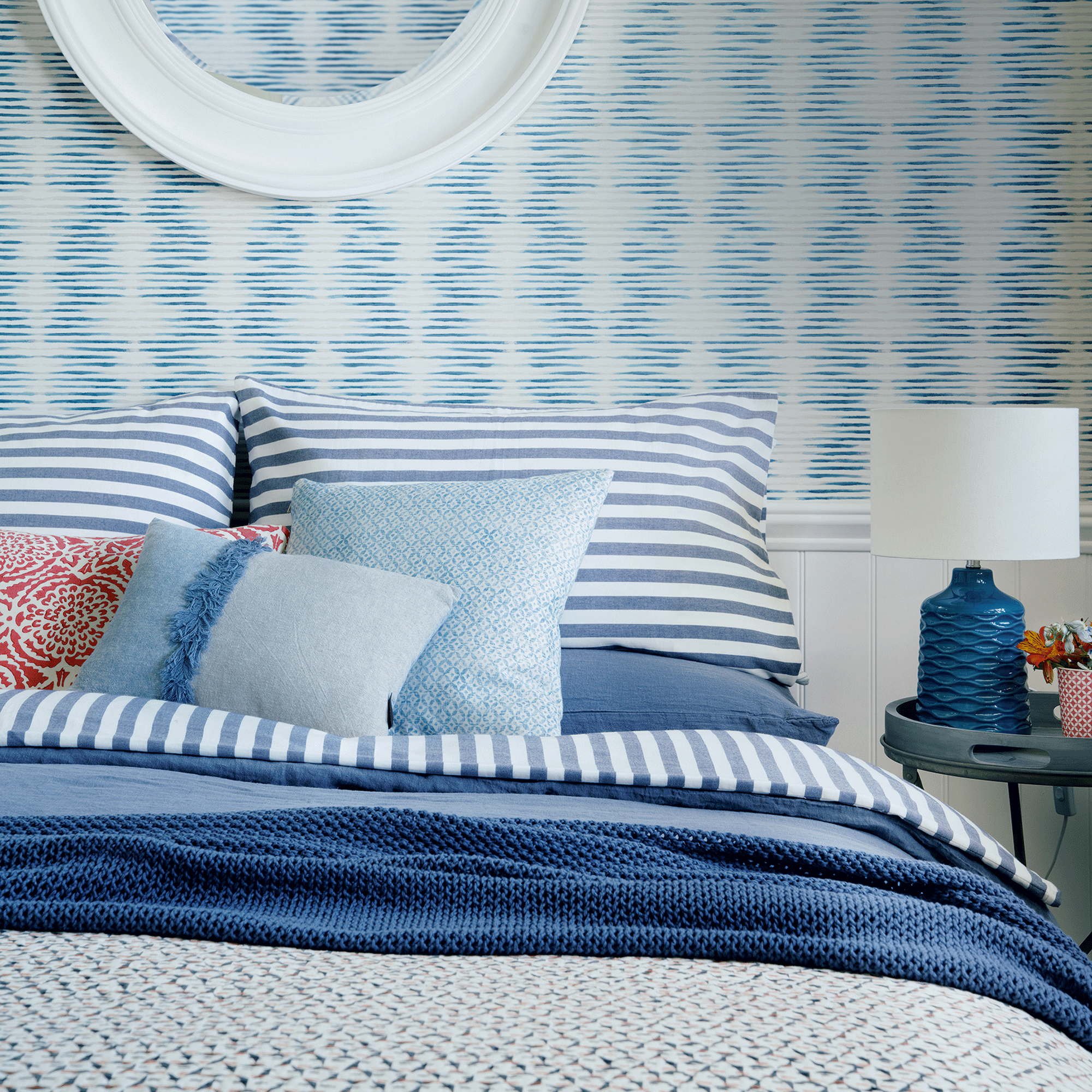
Hanging wallpaper is still a job that I find a little bit scary and that may, in part, be due to a distant memory I have of attempting to hang lining paper in my daughter's bedroom on a very hot day some years ago – the stuff just would not stay in place.
According to Justin Brown, wallpapering can end up pretty disastrously if carried out in the wrong conditions. 'Wallpaper paste dries too fast in hot weather at the edges and this can lead to it peeling within weeks.'
Martin Garbutt, head of technical governance at home services platform Ding agrees. 'Ideally, rooms should be around 18°C to 20°C when hanging wallpaper. Wallpaper adhesives dry too quickly in hot conditions, causing edges to lift and bubbles to form'

No adhesive is required for this pretty wallpaper – simply peel off the backing and you're good to go. If you do prefer the traditional methods, you can also buy it in paste-the-paper form.
6. Plastering – even patch repairs

While I have never actually mastered the very skilful task of plastering, I have attempted to patch up a few holes in walls, using filler and the like. Additionally, during the renovation of our house, there were several instances when the plasterers were unable to come out due to the internal room temperature and humidity levels.
'It is critical that plastering is carried out under the right conditions,' says Justin Brown. 'Surface temperatures of over 25°C dry the surface before the backing coat sets, causing cracking.'
'Plastering in a heatwave is a big DIY mistake,' picks up Pete Bell. 'A good plaster finish relies on a controlled, gradual curing process. Heat causes the moisture to evaporate out of the skim coat in minutes rather than hours. This results in flash drying, and you lose vital time for workability. One trick I use is to make sure you PVA the surface, then gently wet up the surface as its drying to give yourself time to work on the finish.'
FAQs
When is the best time of year to decorate?
While summer might seem like the ideal time to get your house looking shipshape, it seems that you need to take care when it comes to choosing the right day and time to carry out decorating tasks such as painting and wallpapering. So when is the best time to paint your home?
'I always paint my house, stain my shed or creosote the fences in late spring (April to June) and early autumn (September),' says Pete Bell. 'When the sun is too hot, the brickwork or timber surface heats up and causes the solvent or water in the paint to evaporate far too quickly. I find this rapid drying prevents the paint from properly levelling out leaving you with visible brush marks. You can also end up with paint or stain that doesn’t adhere properly and won’t be as durable. If you have to paint in the midst of summer, do it early mornings or later in the evenings.'
'For the best results, aim to paint when temperatures are between around 10°C and 20°C,' adds Martin Garbutt. 'Once you move beyond 25°C, particularly on walls exposed to direct sunlight, you'll usually find the finish suffers. If you can, postpone major DIY projects or repairs until the weather cools down. If the job can't wait, make sure to start early in the morning or leave it until the evening to avoid working in direct sunlight during the hottest part of the day.
'Heatwaves are a much better opportunity to focus on lighter outdoor jobs, such as watering the garden, pruning, weeding or general maintenance, rather than taking on projects that rely on adhesives, paint or prolonged physical work in full sun,' concludes Martin.
When temperatures level off a little, the longer days of summer can provide the ideal opportunity to spruce up the exterior of your house by carrying out DIY jobs to boost the kerb appeal of your house, such as tidying up the driveway or trimming hedges.

If you enjoyed reading this, sign up for the Ideal Home newsletter for all the latest home decor trends and inspiration delivered straight to your inbox
