How to plan the perfect space-savvy home – 3 experts share their insider tricks to maximise the potential of a small layout
Turn a challenging small space into a dreamy home


Meet the experts
- Lisa Raynes, Architect and Founder of Pride Road - 'Small homes mean you need to think properly. It's not about squeezing more in, it's about making every bit of space work harder.'
- John Law, Creative Director, Interiors at Woodhouse & Law - ‘Creative, bold moves can have even more impact in a small space.'
- Alexandra Fryer, Home Design Stylist at John Lewis - ‘A small space means you need to utilise your space better, with practical storage.'
Small homes can be a challenge, with so much to fit in and with little space to play with. When it comes to planning a small space or home, you need to think big about your small living room ideas and small kitchen ideas, as our three experts, an architect, an interiors stylist and a creative director, know.
‘The average size of our homes has shrunk over the past 50 years,' says John, ‘which is even more evident if you live in a new-build home. Ironically, while room proportions have reduced, our homes are under more pressure to deliver than ever.'
Lisa agrees: ‘Homes now need to work for everything – working, relaxing, entertaining and storage, with the kitchen now the heart of the home, rather than a separate back room – people want spaces that feel connected but still function properly.'
Think 'flexible'
‘The right furniture makes a huge difference to a small space,' says John. ‘Where possible, consider how pieces can have multiple uses, such as a coffee table arrangement in cubes that double up as a footstool, side table or extra seating for guests.' The best storage coffee tables are also a smart investment.

Alexandra says, ‘Extendable dining tables are a great addition to a small space, especially if you like to entertain. Pair it with a bench that sits under the table for a compact look that is practical. In the bedroom, ottoman beds with storage underneath offer maximum space.'
Stay on top of clutter
‘A small home with clutter feels overwhelming,' says Lisa. ‘Everything needs a place, ideally hidden. I get help with this myself. I've used professional declutterers just to stay on top of things.'
Alexandra adds, ‘It's amazing how much we hold onto without even realising it.' John agrees: ‘It's so important to manage clutter in small spaces. Choose pieces that are practical as well as beautiful so you can display items with pride.'

Use architectural features
‘Panelling can be really effective in small spaces; it gives you the opportunity to create walls of storage in a space without it looking like a joinery showroom,' says John. ‘For example, creating a cavity 30cm in depth across a room and panelling the facade with hidden doors can provide a huge amount of storage.'
Alexandra likes to use the space under the stairs, ‘either for a compact desk or built-in storage.'

‘The orientation of doors is also an important consideration. In older properties, it's common for the door not to open against the wall but into a room, which can cut the room in two and make furniture placement tricky. Rehanging a door is a relatively quick fix and can make a huge difference,' says John.
‘Sliding doors or pocket doors are useful when space is tight,' says Lisa, ‘particularly to avoid door clashes, but they are expensive, I tend to use them carefully'.
Lisa adds, ‘Sometimes adding a wall actually improves the layout, as it gives you more usable areas for storage. Open plan can still work in a small home, but if you lose too many walls, you lose places to put things, and the space feels more cluttered.'
Balance high and low
‘Ideally, you want to keep as much off the floor as possible, while not overwhelming the walls with storage so they feel cluttered,' says Alexandra. ‘The simple answer is to “trade-off” between the two, choosing one or two “anchor walls” for height and keeping the rest storage-free.'
Lisa agrees: ‘There's always a balance. Empty walls can feel spacious, but if you don't have enough storage, clutter will take over elsewhere. Very high storage often looks good, but doesn't tend to get used. I would prioritise easily accessible, well-designed storage. If you can design storage on both sides of a wall, that's when the space really starts to work hard.'

For similar paint, try French Grey Mid intelligent matt emulsion, £70 for 2.5ltr, Little Greene
Get the lighting right
‘The right lighting can make or break any interior. Universal rules apply in that all spaces should have layers of light to add depth to the scheme,' says John.
‘Lighting a small room is less about adding more lights and more about the right mix in the right place so the space feels open and intentional,' says Alexandra. ‘A simple pendant is great as a base, then add functional lights, such as a desk lamp or bedside lamp. Finally, add accent lights, such as wall lights or table lamps. Rechargeable lamps make a great addition and have the benefit of flexibility, as they can be moved anywhere around your home depending on the need.'

Add clever touches
‘Mirrors are a great way to bounce light around a room, but many people are scared to go big, says Alexandra. ‘Bigger is better as small can make the walls feel as if they are closing in.'
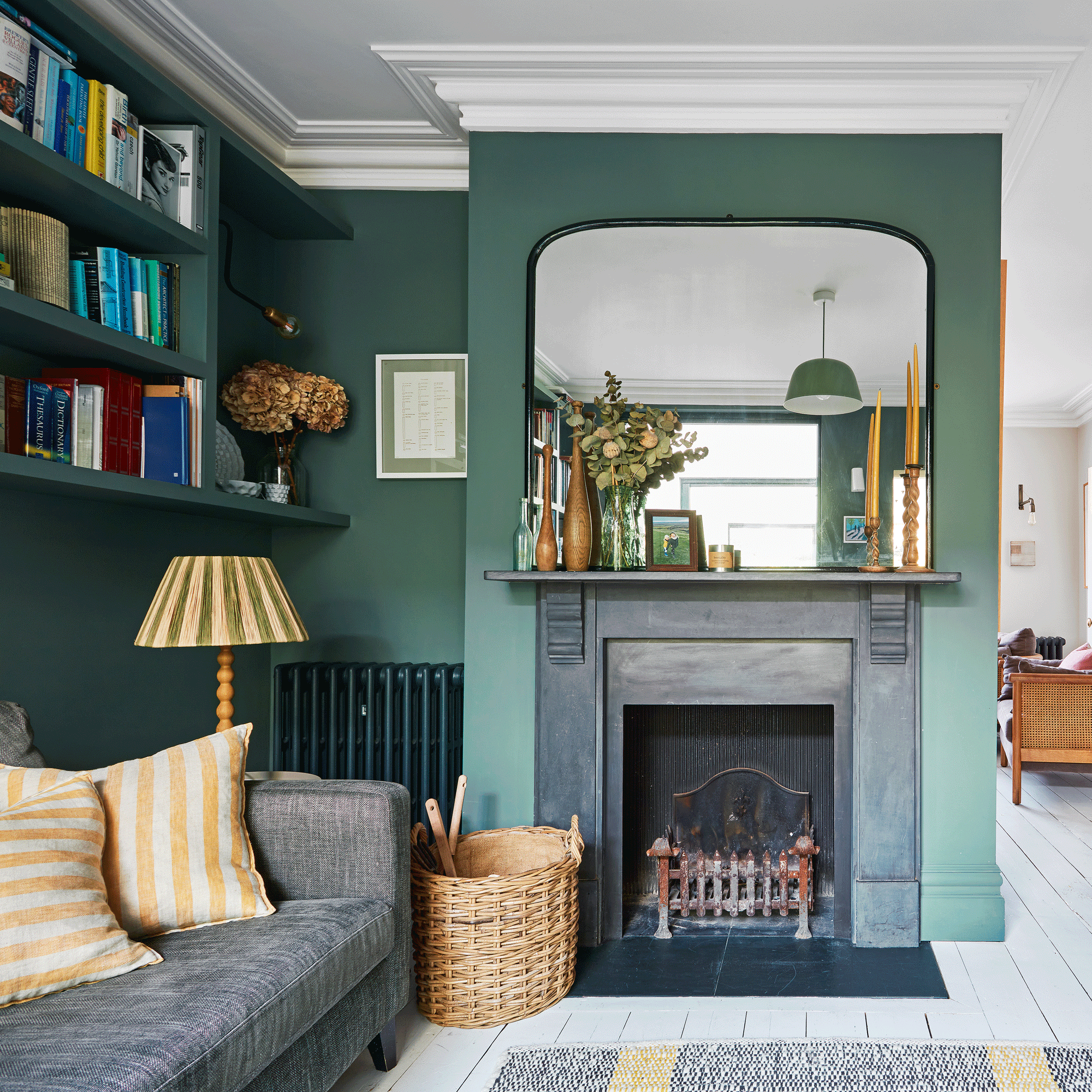
‘When thinking about colour, don't just default to white,' says John. ‘Taking one colour over the walls and ceilings will help blur boundaries, but the same colour will look different across a vertical and horizontal plane. So you might need tints to ensure it looks similar on a ceiling and wall, for example.'
John adds, ‘In small spaces with high ceilings, try introducing picture rails and using two colours to avoid a towering effect. Whatever you do, don't default to a neutral as a safe bet. Surely it's better to live in a space that's full of colour, if that's your vibe, than to deny yourself living in a space you love.'
Need to know... easy wins for making more of your space
John Law of Woodhouse & Law shares his expert tips
- Think laterally and vertically. Consider the volume of the space as a whole. Inside seating, beds and niches.
- Be bold and creative. Don't default to neutrals as a safe bet. Even the smallest space should reflect your character.
- Be ruthless with clutter. Focus on the pieces that you really cherish.
- Think outside the box. If your kitchen is tiny, a washing machine can go on the first floor. Add a bookcase to your bathroom.
Small space essentials

This multi-tasking coffee table include two boxes that hide storage and double up as extra seats or side tables.

The back or any door in the house can be turned into extra storage space, with this clever organiser that has pockets on all sides.

In a small bedroom a storage headboard or ottoman bed will be a lifesaver for including extra shelving space without encroaching on the floor space.
